Home › Projects › Cold storage and cold chain Cold storage and cold chain: joint development projects 9 projects open for teams, with CIDSA lab support, software access and staged funding. Notes on each project follow the list.
All projects
M-099 Venture grade
Pay-per-crate cold-room operator
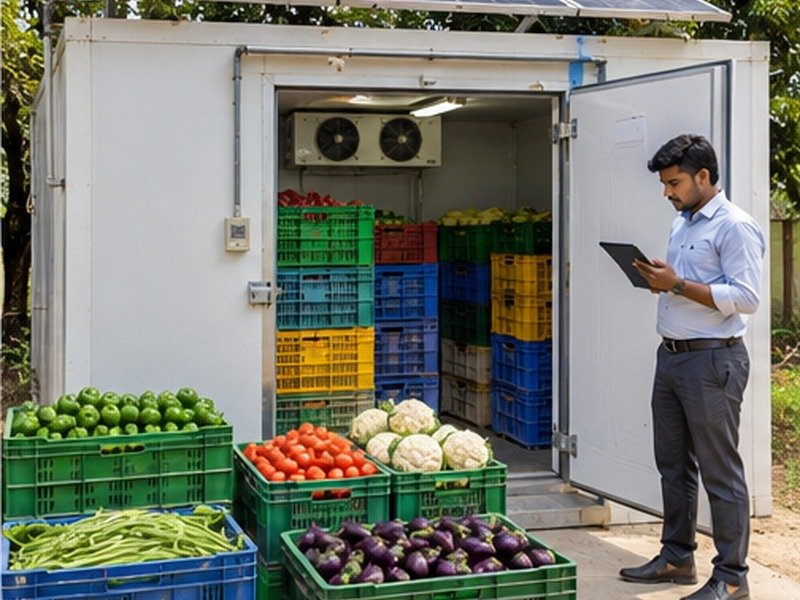
Solar cold room run as a storage service near markets
Small growers sell perishables the same day, at whatever price the market gives, because they have nowhere cool to store them.
A solar cold room near markets that rents storage by the crate per day.
Farmers hold produce for a better price, and the cold room earns from steady crate rentals.
Aim innovation, smart Programme Agripreneurship ventures Segment Agri-enterprise models Type Service enterprise Grade Venture grade Priority Very high Duration 18 months (12 months development plus one season of trials) Where it fits Aspirational districts and FPO clusters in all agro-climatic zones Method Incubation cohort; unit-economics model; pilot with FPOs Team role Processing & production micro-enterprise CIDSA lab Lab 7 – Agri-Entrepreneurship & Market Lab Funding route Scheme support, seed grant and bank credit Outcome Incubated venture Software and tools CIDSA Farm ERP & Administrative Intelligence Suite, CIDSA Incubation & Innovation Management Platform Partners to involve FPO / KVK / farmer network, Bank / NBFC / insurer Estimated budget ₹15.4 lakh, released in stages
Stages and funding L0 · Learn and plan ₹0.8 lakh · 2 short course seats; 2 lab software tools for 1 month; mentoring and design reviews L1 · Business plan and first customers ₹0.5 lakh · Business plan, 10-20 customer commitments, site and licences list L2 · Asset set-up ₹9.7 lakh · Set up the asset base (₹15 lakh before ₹5.3 lakh scheme support) L3 · Licences and compliance ₹0.4 lakh · Licences, registrations, insurance and safety compliance L4 · Working capital ₹2 lakh · Three months of operating cash for the first customers L5 · Launch to revenue ₹2 lakh · Local promotion, demo days, digital listing and customer onboarding
Open M-099 in the portal and form a team
M-217 Product grade
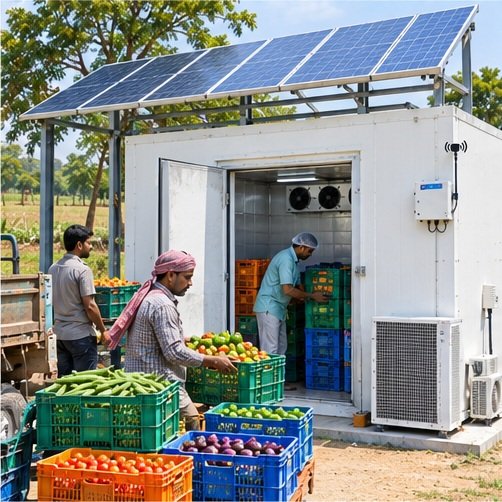
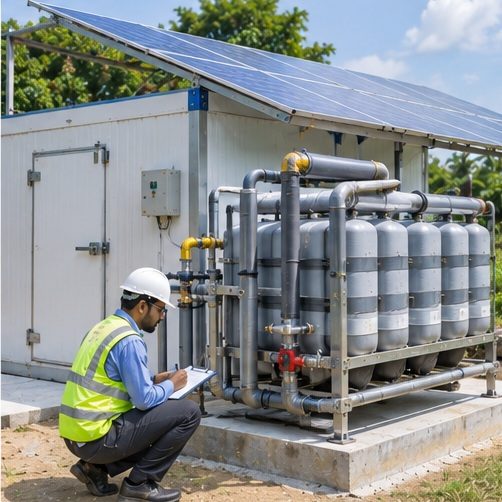
Solar cold room for FPOs
5–10 t off-grid cold room with remote monitoring
FPOs lose a lot of perishable produce simply because they have nowhere cool to keep it, and many collection points have no reliable grid power. Members are forced to sell on the day of harvest.
A 5–10 tonne solar cold room that runs off-grid, with remote monitoring of temperature and power.
Produce kept fresh for days without diesel, and FPOs selling when prices are better.
Aim product, innovation, smart Programme Crop & value-chain solutions Segment Post-Harvest, Storage & Cold Chain Type Product (hardware) Grade Product grade Priority Very high Duration 18 months (12 months development plus one season of trials) Where it fits Fruit and vegetable clusters; potato and onion belts Method Adapt existing Indian design; CIDSA Agni Team role Processing & production micro-enterprise CIDSA lab Lab 5 – Drone Technology & Aerial Imaging Lab Funding route Grant first, then milestone-linked seed Outcome Technology transfer and adaptation Software and tools Cradle CFD (scFLOW Performance Set – 4 Cores), Easy5 Electrical Systems Library Partners to involve Indian OEM / MSME manufacturer, Startup / incubator, Bank / NBFC / insurer Estimated budget ₹33.3 lakh, released in stages
Stages and funding L0 · Learn and specify ₹2.4 lakh · 3 short course seats and 1 professional programme seat; 2 lab software tools for 4 months; mentoring and design reviews L1 · Proof of concept ₹2.4 lakh · Design, analysis and virtual prototype on CIDSA lab software L2 · Prototype ₹13.4 lakh · 1 prototype built and bench-tested L3 · Validation and certification ₹1.8 lakh · Field trials and statutory testing L4 · Pilot batch ₹11.3 lakh · 2 pilot units placed with early buyers, half the cost recovered L5 · Launch to revenue ₹2 lakh · Launch: dealer or channel onboarding, demos, documentation and first orders
Open M-217 in the portal and form a team
M-219 Product grade
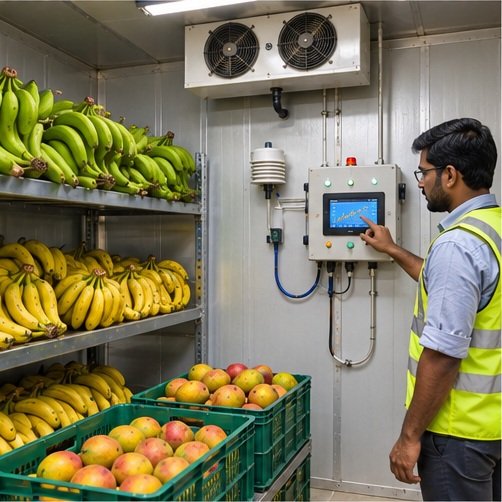
Ripening chamber controller
Ethylene, CO₂ and temperature control for banana and mango
Bananas and mangoes are often ripened with calcium carbide or by guesswork, giving uneven, unsafe fruit that buyers distrust.
A controller that manages ethylene, CO₂ and temperature in ripening chambers.
Safe, even ripening that buyers trust and pay more for.
Aim product Programme Crop & value-chain solutions Segment Post-Harvest, Storage & Cold Chain Type Retrofit kit / attachment Grade Product grade Priority High Duration 18 months (12 months development plus one season of trials) Where it fits Fruit and vegetable clusters; potato and onion belts Method Integrate components & software; CIDSA Agni Team role Installer & service dealership CIDSA lab Lab 5 – Drone Technology & Aerial Imaging Lab Funding route Grant first, then milestone-linked seed Outcome System integration partnership Software and tools Cradle CFD (scFLOW Performance Set – 4 Cores) Partners to involve Engineering institution, Processor / exporter / retailer Estimated budget ₹21.6 lakh, released in stages
Stages and funding L0 · Learn and specify ₹2 lakh · 3 short course seats and 1 professional programme seat; 1 lab software tool for 4 months; mentoring and design reviews L1 · Proof of concept ₹3 lakh · Design, analysis and virtual prototype on CIDSA lab software L2 · Prototype ₹3.6 lakh · 6 prototypes built and bench-tested L3 · Validation and certification ₹2 lakh · Field trials and statutory testing L4 · Pilot batch ₹9 lakh · 30 pilot units placed with early buyers, half the cost recovered L5 · Launch to revenue ₹2 lakh · Launch: dealer or channel onboarding, demos, documentation and first orders
Open M-219 in the portal and form a team
M-426 Product grade
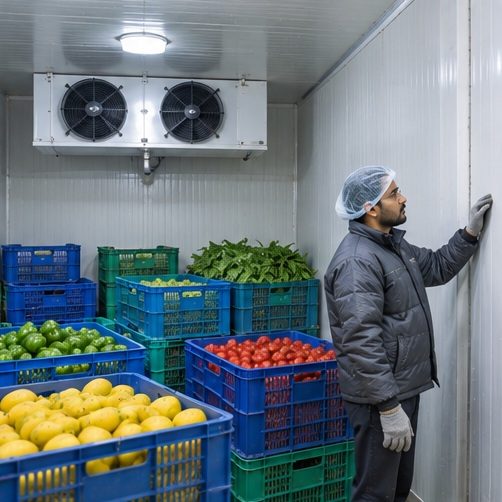
Cold-room envelope and refrigeration right-sizing
Heat-load model for insulation and compressor choice
Cold rooms are often built with too little insulation or an oversized compressor, so they cost more to build and run than they should.
A heat-load model for choosing insulation and compressor size.
Right-sized cold rooms that use less power.
Aim product Programme Equipment engineering Segment Post-Harvest & Cold Chain Type Cold room Grade Product grade Priority Very high Duration 18 months (12 months development plus one season of trials) Where it fits Fruit, vegetable, potato and onion clusters Method Thermal & psychrometric modelling; Value engineering & should-costing Team role Processing & production micro-enterprise CIDSA lab Lab 5 – Drone Technology & Aerial Imaging Lab Funding route Grant first, then milestone-linked seed Outcome Co-development with shared IP Software and tools Cradle CFD (scFLOW Performance Set – 4 Cores) Partners to involve Engineering institution, Indian OEM / MSME manufacturer, Bank / NBFC / insurer Estimated budget ₹8.9 lakh, released in stages
Stages and funding L0 · Learn and specify ₹2 lakh · 3 short course seats and 1 professional programme seat; 1 lab software tool for 4 months; mentoring and design reviews L1 · Proof of concept ₹1.5 lakh · Design, analysis and virtual prototype on CIDSA lab software L2 · Prototype ₹2.8 lakh · 1 prototype built and bench-tested L3 · Validation and certification ₹1.8 lakh · Field trials and statutory testing L5 · Launch to revenue ₹0.8 lakh · Launch: dealer or channel onboarding, demos, documentation and first orders
Open M-426 in the portal and form a team
M-427 Product grade
Solar cold-room thermal storage sizing
Ice-bank or phase-change storage instead of batteries
Batteries for solar cold rooms are expensive and wear out, which makes off-grid cooling hard to afford.
Ice-bank or phase-change thermal storage sized in place of batteries.
Cold rooms that stay cool overnight without large batteries.
Aim product, innovation Programme Equipment engineering Segment Post-Harvest & Cold Chain Type Cold room Grade Product grade Priority Very high Duration 18 months (12 months development plus one season of trials) Where it fits Fruit, vegetable, potato and onion clusters Method Thermal & psychrometric modelling; Battery & powertrain modelling Team role Processing & production micro-enterprise CIDSA lab Lab 5 – Drone Technology & Aerial Imaging Lab Funding route Grant first, then milestone-linked seed Outcome Co-development with shared IP Software and tools Cradle CFD (scFLOW Performance Set – 4 Cores), Easy5 Electrical Systems Library Partners to involve Engineering institution, Startup / incubator, Indian OEM / MSME manufacturer Estimated budget ₹9.3 lakh, released in stages
Stages and funding L0 · Learn and specify ₹2.4 lakh · 3 short course seats and 1 professional programme seat; 2 lab software tools for 4 months; mentoring and design reviews L1 · Proof of concept ₹1.5 lakh · Design, analysis and virtual prototype on CIDSA lab software L2 · Prototype ₹2.8 lakh · 1 prototype built and bench-tested L3 · Validation and certification ₹1.8 lakh · Field trials and statutory testing L5 · Launch to revenue ₹0.8 lakh · Launch: dealer or channel onboarding, demos, documentation and first orders
Open M-427 in the portal and form a team
M-428 Product grade
Pre-cooler duct and crate vent design
Crate vent area and duct layout for faster cooling
Produce cools slowly in pre-coolers when crate vents and ducts are poorly designed, so shelf life is lost before storage even begins.
Better crate vent area and duct layout.
Faster pre-cooling and longer shelf life.
Aim design, product Programme Equipment engineering Segment Post-Harvest & Cold Chain Type Pre-cooling & ripening Grade Product grade Priority High Duration 18 months (12 months development plus one season of trials) Where it fits Fruit, vegetable, potato and onion clusters Method CFD flow simulation; Instrumented testing & design of experiments Team role Processing & production micro-enterprise CIDSA lab Lab 5 – Drone Technology & Aerial Imaging Lab Funding route Grant first, then milestone-linked seed Outcome Co-development with shared IP Software and tools Cradle CFD (scFLOW Performance Set – 4 Cores) Partners to involve Agri university / ICAR institute, Engineering institution, Processor / exporter / retailer Estimated budget ₹18.4 lakh, released in stages
Stages and funding L0 · Learn and specify ₹2 lakh · 3 short course seats and 1 professional programme seat; 1 lab software tool for 4 months; mentoring and design reviews L1 · Proof of concept ₹2.4 lakh · Design, analysis and virtual prototype on CIDSA lab software L2 · Prototype ₹5.7 lakh · 1 prototype built and bench-tested L3 · Validation and certification ₹1.8 lakh · Field trials and statutory testing L4 · Pilot batch ₹4.5 lakh · 2 pilot units placed with early buyers, half the cost recovered L5 · Launch to revenue ₹2 lakh · Launch: dealer or channel onboarding, demos, documentation and first orders
Open M-428 in the portal and form a team
M-429 Product grade
Ripening chamber gas distribution
Ethylene and airflow uniformity across stacks
Fruit at the edges of a ripening chamber ripens differently from fruit in the middle, so a single batch comes out mixed.
Even distribution of ethylene and air across stacks.
Uniform ripening across the whole chamber.
Aim product Programme Equipment engineering Segment Post-Harvest & Cold Chain Type Pre-cooling & ripening Grade Product grade Priority High Duration 18 months (12 months development plus one season of trials) Where it fits Fruit, vegetable, potato and onion clusters Method CFD flow simulation; Embedded control & model-based design Team role Processing & production micro-enterprise CIDSA lab Lab 5 – Drone Technology & Aerial Imaging Lab Funding route Grant first, then milestone-linked seed Outcome Co-development with shared IP Software and tools Cradle CFD (scFLOW Performance Set – 4 Cores), Easy5 Basic Package Partners to involve Engineering institution, Processor / exporter / retailer Estimated budget ₹18.8 lakh, released in stages
Stages and funding L0 · Learn and specify ₹2.4 lakh · 3 short course seats and 1 professional programme seat; 2 lab software tools for 4 months; mentoring and design reviews L1 · Proof of concept ₹2.4 lakh · Design, analysis and virtual prototype on CIDSA lab software L2 · Prototype ₹5.7 lakh · 1 prototype built and bench-tested L3 · Validation and certification ₹1.8 lakh · Field trials and statutory testing L4 · Pilot batch ₹4.5 lakh · 2 pilot units placed with early buyers, half the cost recovered L5 · Launch to revenue ₹2 lakh · Launch: dealer or channel onboarding, demos, documentation and first orders
Open M-429 in the portal and form a team
M-434 Product grade
Crate, bin and pallet standardisation
Stackable returnable crate set sized for Indian vehicles
Crates, bins and pallets come in every size, wasting truck space and damaging produce in transit.
A stackable, returnable crate set sized for Indian vehicles.
Fuller trucks and less damaged produce.
Aim design, product Programme Equipment engineering Segment Post-Harvest & Cold Chain Type Crates & reefer transport Grade Product grade Priority Very high Duration 18 months (12 months development plus one season of trials) Where it fits Fruit, vegetable, potato and onion clusters Method CAD & DFM (TCCAD); FEA structural analysis; Value engineering & should-costing Team role Processing & production micro-enterprise CIDSA lab Lab 4 – Farm Equipment & Innovation Lab Funding route Grant first, then milestone-linked seed Outcome Co-development with shared IP Software and tools MSC Apex Modeller, MSC Nastran LS Productivity Bundle (Nastran LS + Patran) Partners to involve Indian OEM / MSME manufacturer, Processor / exporter / retailer Estimated budget ₹8.2 lakh, released in stages
Stages and funding L0 · Learn and specify ₹2.4 lakh · 3 short course seats and 1 professional programme seat; 2 lab software tools for 4 months; mentoring and design reviews L1 · Proof of concept ₹1.5 lakh · Design, analysis and virtual prototype on CIDSA lab software L2 · Prototype ₹1.7 lakh · 1 prototype built and bench-tested L3 · Validation and certification ₹1.8 lakh · Field trials and statutory testing L5 · Launch to revenue ₹0.8 lakh · Launch: dealer or channel onboarding, demos, documentation and first orders
Open M-434 in the portal and form a team
M-435 Research grade
Reefer body insulation and door-seal study
Heat-leak reduction for small reefer vehicles
Small reefer vehicles leak heat through poor insulation and worn door seals, burning extra fuel and warming produce.
A study and fix of insulation and door seals.
Lower heat leak and fuel use on every trip.
Aim design, analysis Programme Equipment engineering Segment Post-Harvest & Cold Chain Type Crates & reefer transport Grade Research grade Priority Medium Duration 24 months Where it fits Fruit, vegetable, potato and onion clusters Method Thermal & psychrometric modelling; Instrumented testing & design of experiments Team role Testing & consulting service CIDSA lab Lab 5 – Drone Technology & Aerial Imaging Lab Funding route Research grant, then licensing Outcome Sponsored research consortium Software and tools Cradle CFD (scFLOW Performance Set – 4 Cores) Partners to involve Engineering institution, Indian OEM / MSME manufacturer, Processor / exporter / retailer Estimated budget ₹9.1 lakh, released in stages
Stages and funding L0 · Learn and specify ₹2 lakh · 3 short course seats and 1 professional programme seat; 1 lab software tool for 4 months; mentoring and design reviews L1 · Proof of concept ₹1.8 lakh · Design, analysis and virtual prototype on CIDSA lab software L2 · Prototype ₹2.2 lakh · 1 prototype built and bench-tested L3 · Validation and certification ₹2.3 lakh · Field trials and statutory testing L5 · Launch to revenue ₹0.8 lakh · Launch: dealer or channel onboarding, demos, documentation and first orders
Open M-435 in the portal and form a team