Compost and bio-inputs: joint development projects
3 projects open for teams, with CIDSA lab support, software access and staged funding. Notes on each project follow the list.
All projects
M-106Venture grade
Bio-input resource centre
Preparation and sale of quality-tested bio-inputs
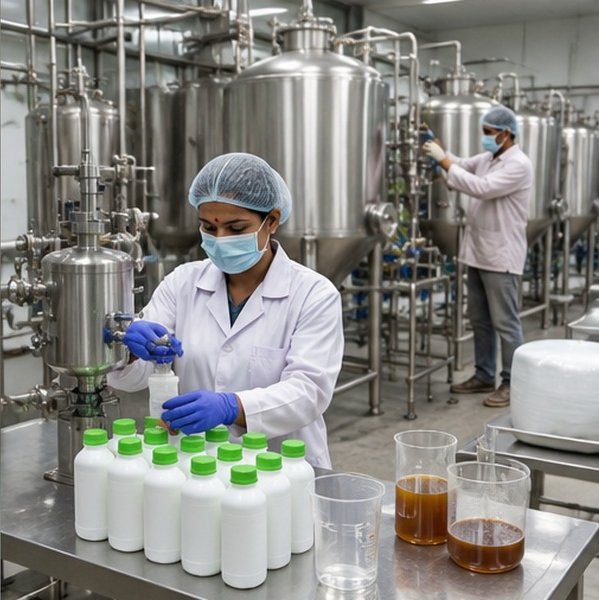
Bio-inputs work only when they are fresh and of good quality, and farmers rarely get either from distant sellers.
A local centre preparing and selling quality-tested bio-inputs.
Reliable bio-inputs sold nearby, with repeat buyers each season.
| Aim | smart |
|---|
| Programme | Agripreneurship ventures |
|---|
| Segment | Agri-enterprise models |
|---|
| Type | Production enterprise |
|---|
| Grade | Venture grade |
|---|
| Priority | High |
|---|
| Duration | 18 months (12 months development plus one season of trials) |
|---|
| Where it fits | Aspirational districts and FPO clusters in all agro-climatic zones |
|---|
| Method | Incubation cohort; unit-economics model; pilot with FPOs |
|---|
| Team role | Processing & production micro-enterprise |
|---|
| CIDSA lab | Lab 7 – Agri-Entrepreneurship & Market Lab |
|---|
| Funding route | Scheme support, seed grant and bank credit |
|---|
| Outcome | Incubated venture |
|---|
| Software and tools | CIDSA Farm ERP & Administrative Intelligence Suite, CIDSA Incubation & Innovation Management Platform |
|---|
| Partners to involve | Agri university / ICAR institute, FPO / KVK / farmer network |
|---|
| Estimated budget | ₹7.2 lakh, released in stages |
|---|
Stages and funding
| L0 · Learn and plan | ₹0.8 lakh · 2 short course seats; 2 lab software tools for 1 month; mentoring and design reviews |
|---|
| L1 · Business plan and first customers | ₹0.5 lakh · Business plan, 10-20 customer commitments, site and licences list |
|---|
| L2 · Asset set-up | ₹3.5 lakh · Set up the asset base (₹5 lakh before ₹1.5 lakh scheme support) |
|---|
| L3 · Licences and compliance | ₹0.4 lakh · Licences, registrations, insurance and safety compliance |
|---|
| L4 · Working capital | ₹1 lakh · Three months of operating cash for the first customers |
|---|
| L5 · Launch to revenue | ₹1 lakh · Local promotion, demo days, digital listing and customer onboarding |
|---|
Farmer case studies for field reference: Surwanshi (Sangli), Yewale (Ahmednagar), Chawan (Beed), Natural farming case 1 (Yavatmal)
Open M-106 in the portal and form a team
M-255Product grade
On-farm composting accelerator
Windrow turner with microbial inoculant protocol
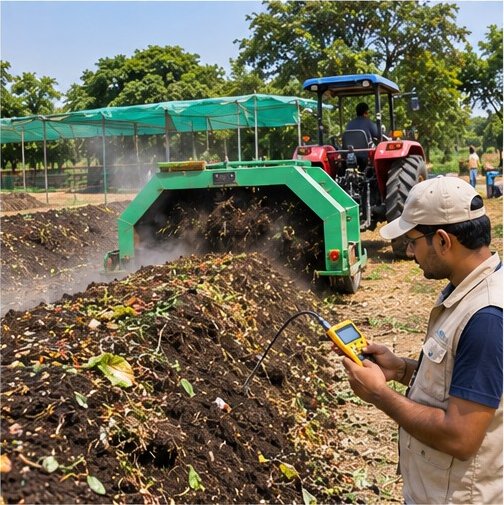
Composting on the farm takes months and the results are uneven, so many farmers give up and burn or dump waste.
A windrow turner with a microbial inoculant routine.
Good compost in weeks instead of months.
| Aim | product |
|---|
| Programme | Crop & value-chain solutions |
|---|
| Segment | Carbon, Bio-energy & Circular Agriculture |
|---|
| Type | Product (hardware) |
|---|
| Grade | Product grade |
|---|
| Priority | High |
|---|
| Duration | 18 months (12 months development plus one season of trials) |
|---|
| Where it fits | Stubble-burning belt of Punjab, Haryana and western UP; dairy and sugar clusters |
|---|
| Method | Adapt existing Indian design; CIDSA Pruthvi |
|---|
| Team role | Manufacturing & dealership |
|---|
| CIDSA lab | Lab 4 – Farm Equipment & Innovation Lab |
|---|
| Funding route | Grant first, then milestone-linked seed |
|---|
| Outcome | Technology transfer and adaptation |
|---|
| Software and tools | MSC Apex Modeller, MSC Nastran LS Productivity Bundle (Nastran LS + Patran) |
|---|
| Partners to involve | Agri university / ICAR institute, Indian OEM / MSME manufacturer, Agri-input company |
|---|
| Estimated budget | ₹13.3 lakh, released in stages |
|---|
Stages and funding
| L0 · Learn and specify | ₹2.4 lakh · 3 short course seats and 1 professional programme seat; 2 lab software tools for 4 months; mentoring and design reviews |
|---|
| L1 · Proof of concept | ₹2.4 lakh · Design, analysis and virtual prototype on CIDSA lab software |
|---|
| L2 · Prototype | ₹2.2 lakh · 2 prototypes built and bench-tested |
|---|
| L3 · Validation and certification | ₹2.4 lakh · Field trials and statutory testing |
|---|
| L4 · Pilot batch | ₹1.9 lakh · 5 pilot units placed with early buyers, half the cost recovered |
|---|
| L5 · Launch to revenue | ₹2 lakh · Launch: dealer or channel onboarding, demos, documentation and first orders |
|---|
Open M-255 in the portal and form a team
M-256Product grade
Natural farming input preparation unit
Jeevamrit and bio-input tanks with dosing
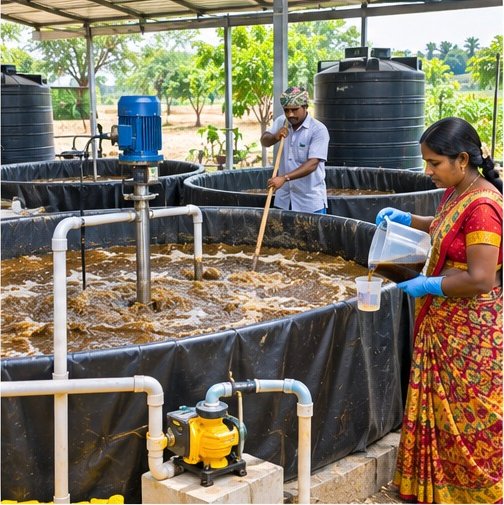
Natural farming inputs like jeevamrit are made by hand in small batches, and quality varies from batch to batch.
Tanks and dosing equipment to prepare natural farming inputs at scale.
A steady supply of consistent natural farming inputs.
| Aim | product |
|---|
| Programme | Crop & value-chain solutions |
|---|
| Segment | Carbon, Bio-energy & Circular Agriculture |
|---|
| Type | Product (hardware) |
|---|
| Grade | Product grade |
|---|
| Priority | High |
|---|
| Duration | 18 months (12 months development plus one season of trials) |
|---|
| Where it fits | Stubble-burning belt of Punjab, Haryana and western UP; dairy and sugar clusters |
|---|
| Method | Adapt existing Indian design; CIDSA Pruthvi |
|---|
| Team role | Manufacturing & dealership |
|---|
| CIDSA lab | Lab 4 – Farm Equipment & Innovation Lab |
|---|
| Funding route | Grant first, then milestone-linked seed |
|---|
| Outcome | Technology transfer and adaptation |
|---|
| Software and tools | MSC Apex Modeller, MSC Nastran LS Productivity Bundle (Nastran LS + Patran) |
|---|
| Partners to involve | Agri university / ICAR institute, FPO / KVK / farmer network, Government department / mission |
|---|
| Estimated budget | ₹13.3 lakh, released in stages |
|---|
Stages and funding
| L0 · Learn and specify | ₹2.4 lakh · 3 short course seats and 1 professional programme seat; 2 lab software tools for 4 months; mentoring and design reviews |
|---|
| L1 · Proof of concept | ₹2.4 lakh · Design, analysis and virtual prototype on CIDSA lab software |
|---|
| L2 · Prototype | ₹2.2 lakh · 2 prototypes built and bench-tested |
|---|
| L3 · Validation and certification | ₹2.4 lakh · Field trials and statutory testing |
|---|
| L4 · Pilot batch | ₹1.9 lakh · 5 pilot units placed with early buyers, half the cost recovered |
|---|
| L5 · Launch to revenue | ₹2 lakh · Launch: dealer or channel onboarding, demos, documentation and first orders |
|---|
Farmer case studies for field reference: Surwanshi (Sangli), Yewale (Ahmednagar), Chawan (Beed), Natural farming case 1 (Yavatmal)
Open M-256 in the portal and form a team