Home › Projects › Floriculture Floriculture: joint development projects 3 projects open for teams, with CIDSA lab support, software access and staged funding. Notes on each project follow the list.
All projects
M-156 Platform grade
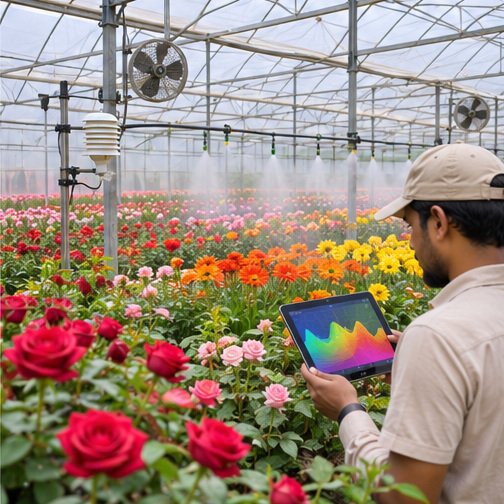
Cut-flower polyhouse climate recipe engine
Rose and gerbera set-points for temperature, VPD and CO₂
Rose and gerbera growers set polyhouse temperature, humidity and CO₂ by experience or guesswork. Small mistakes show up as short stems and poor flowers.
A library of tested climate settings for rose and gerbera at each growth stage.
Better stem length and quality, and more marketable flowers per square metre.
Aim smart Programme Crop & value-chain solutions Segment Floriculture, Medicinal & Aromatic Plants Type Software / platform module Grade Platform grade Priority High Duration 18 months (12 months development plus one season of trials) Where it fits Karnataka, Tamil Nadu, West Bengal, Gujarat, Uttarakhand and the North East Method Indigenous development; CIDSA Vayu Team role Digital & data service agent CIDSA lab Lab 2 – Smart Precision Agriculture Lab Funding route Grant first, then milestone-linked seed Outcome Co-development with shared IP Software and tools CIDSA Vayu Climate Intelligence Suite, CIDSA Agni Ops Platform Partners to involve Agri university / ICAR institute, Startup / incubator Estimated budget ₹16.8 lakh, released in stages
Stages and funding L0 · Learn and specify ₹2.4 lakh · 3 short course seats and 1 professional programme seat; 2 lab software tools for 4 months; mentoring and design reviews L1 · Proof of concept ₹4.8 lakh · Design, analysis and virtual prototype on CIDSA lab software L2 · Prototype ₹3.6 lakh · Build sprints for the minimum viable product L3 · Validation and certification ₹1 lakh · Field trials L4 · Pilot batch ₹2 lakh · Pilot with first FPOs or dealers L5 · Launch to revenue ₹3 lakh · Launch: dealer or channel onboarding, demos, documentation and first orders
Farmer case studies for field reference: Srinivas Munnuru (Vikarabad) , Shanti Kumar (Doda) , Migwa Tshering Lepcha (Kalimpong) , Jhumur Dalei (Ganjam)
Open M-156 in the portal and form a team
M-157 Product grade
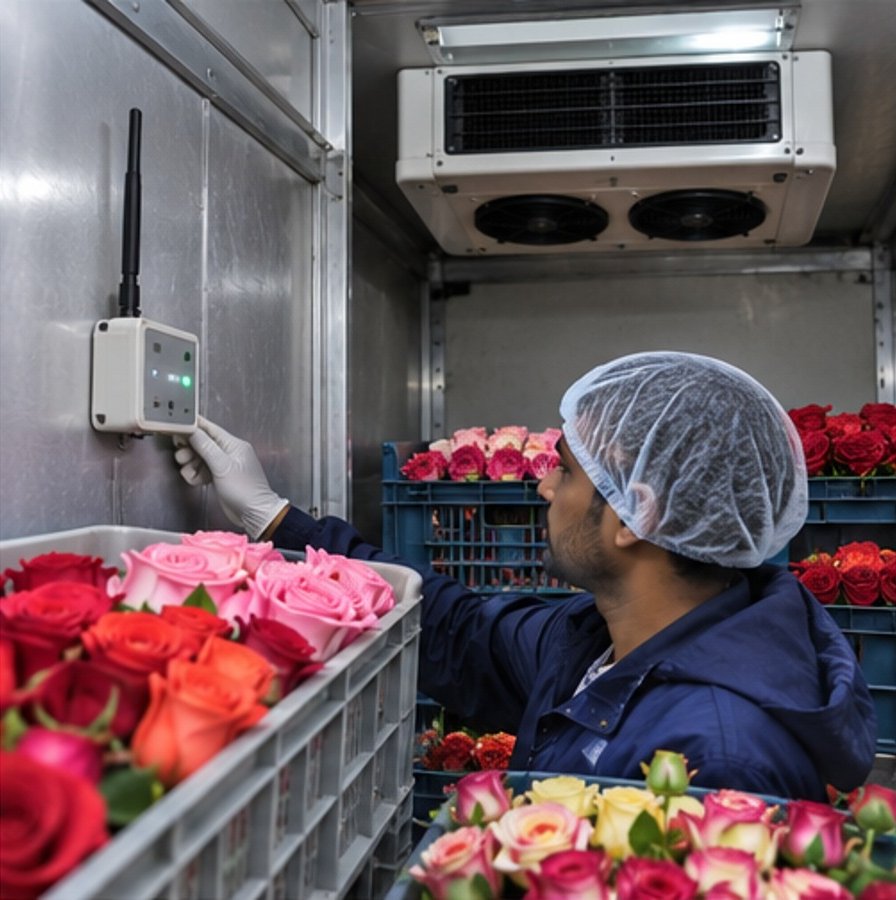
Flower cold-chain data logger
Low-cost logger for reefer and air-freight consignments
Cut flowers lose value fast if they warm up in transit. When a consignment arrives wilted, nobody can prove where the cold chain broke.
A low-cost temperature logger for reefer trucks and air-freight boxes.
Every consignment carries a record that shows whether, and where, the cold chain failed.
Aim product, smart Programme Crop & value-chain solutions Segment Floriculture, Medicinal & Aromatic Plants Type Product (hardware) Grade Product grade Priority High Duration 18 months (12 months development plus one season of trials) Where it fits Karnataka, Tamil Nadu, West Bengal, Gujarat, Uttarakhand and the North East Method Integrate components & software; CIDSA Akasha Team role Processing & production micro-enterprise CIDSA lab Lab 2 – Smart Precision Agriculture Lab Funding route Grant first, then milestone-linked seed Outcome System integration partnership Software and tools CIDSA Agni Ops Platform Partners to involve Startup / incubator, Processor / exporter / retailer Estimated budget ₹13.8 lakh, released in stages
Stages and funding L0 · Learn and specify ₹2 lakh · 3 short course seats and 1 professional programme seat; 1 lab software tool for 4 months; mentoring and design reviews L1 · Proof of concept ₹3 lakh · Design, analysis and virtual prototype on CIDSA lab software L2 · Prototype ₹1 lakh · 20 prototypes built and bench-tested L3 · Validation and certification ₹2 lakh · Field trials and statutory testing L4 · Pilot batch ₹3.8 lakh · 150 pilot units placed with early buyers, half the cost recovered L5 · Launch to revenue ₹2 lakh · Launch: dealer or channel onboarding, demos, documentation and first orders
Farmer case studies for field reference: Srinivas Munnuru (Vikarabad) , Shanti Kumar (Doda) , Migwa Tshering Lepcha (Kalimpong) , Jhumur Dalei (Ganjam)
Open M-157 in the portal and form a team
M-158 Data & AI grade
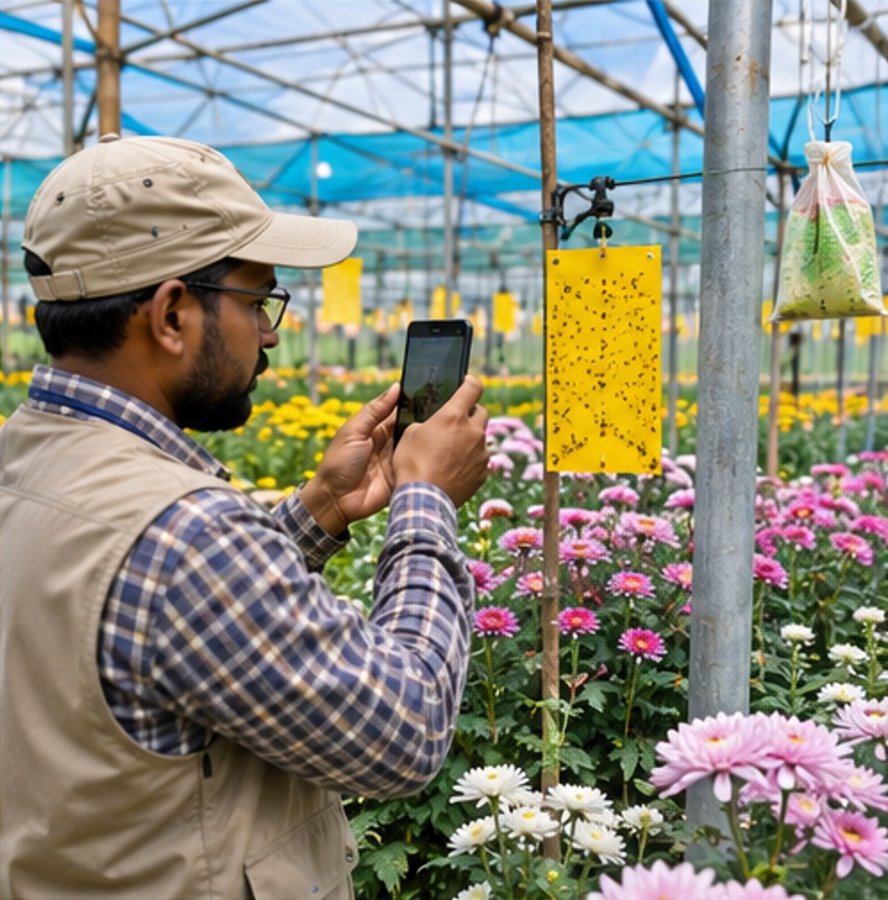
Polyhouse thrips and mite monitoring
Sticky-card image counting with biocontrol release plan
Thrips and mites build up quickly in the warm air of a polyhouse. Growers often notice only after damage appears and then spray hard.
Phone photos of sticky cards counted automatically, with a plan for releasing biological controls.
Pests caught early and controlled with fewer chemical sprays.
Aim innovation, smart Programme Crop & value-chain solutions Segment Floriculture, Medicinal & Aromatic Plants Type AI model / dataset Grade Data & AI grade Priority High Duration 18 months (12 months development plus one season of trials) Where it fits Karnataka, Tamil Nadu, West Bengal, Gujarat, Uttarakhand and the North East Method Indigenous development; CIDSA Farm Protect Team role Digital & data service agent CIDSA lab Lab 2 – Smart Precision Agriculture Lab Funding route Grant first, then milestone-linked seed Outcome Sponsored research consortium Software and tools CIDSA Crop Stress & Disease Intelligence, CIDSA Agni Ops Platform Partners to involve Agri university / ICAR institute, Agri-input company Estimated budget ₹15.3 lakh, released in stages
Stages and funding L0 · Learn and specify ₹2.4 lakh · 3 short course seats and 1 professional programme seat; 2 lab software tools for 4 months; mentoring and design reviews L1 · Proof of concept ₹3.6 lakh · Design, analysis and virtual prototype on CIDSA lab software L2 · Prototype ₹3.3 lakh · Data labelling and model training L3 · Validation and certification ₹2.5 lakh · Field trials L4 · Pilot batch ₹2 lakh · Pilot with first users L5 · Launch to revenue ₹1.5 lakh · Launch: dealer or channel onboarding, demos, documentation and first orders
Farmer case studies for field reference: Srinivas Munnuru (Vikarabad) , Migwa Tshering Lepcha (Kalimpong) , Jhumur Dalei (Ganjam) , Ali Hasmat Rehan (Kishanganj)
Open M-158 in the portal and form a team