Greenhouses and polyhouses: joint development projects
4 projects open for teams, with CIDSA lab support, software access and staged funding. Notes on each project follow the list.
All projects
M-162Product grade
Low-cost polyhouse climate controller
Open-hardware controller for vents, foggers and shade nets
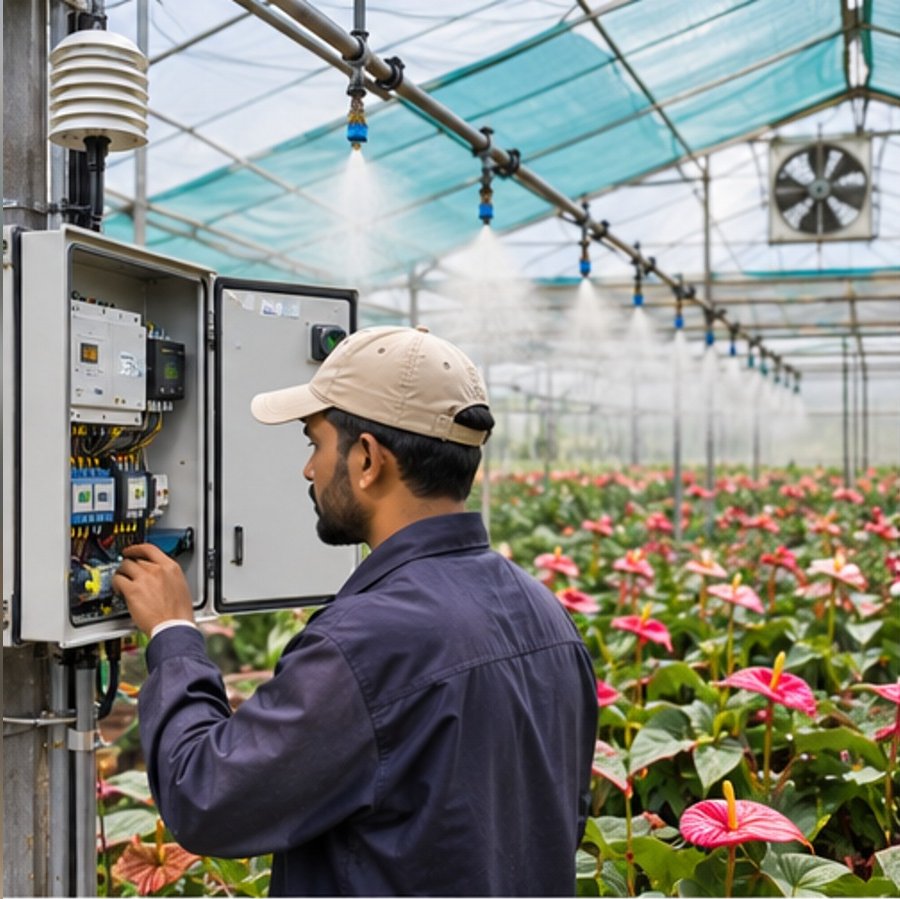
Imported polyhouse controllers are expensive, so most small polyhouses are run by hand: vents opened late, foggers forgotten and plants stressed.
A low-cost open-hardware controller for vents, foggers and shade nets.
Small polyhouses kept in the right climate automatically, at a price small growers can pay.
| Aim | product |
|---|
| Programme | Crop & value-chain solutions |
|---|
| Segment | Protected Cultivation & Vertical Farming |
|---|
| Type | Product (hardware) |
|---|
| Grade | Product grade |
|---|
| Priority | Very high |
|---|
| Duration | 18 months (12 months development plus one season of trials) |
|---|
| Where it fits | Peri-urban clusters and hill states |
|---|
| Method | Indigenous development; CIDSA Vayu |
|---|
| Team role | Manufacturing & dealership |
|---|
| CIDSA lab | Lab 5 – Drone Technology & Aerial Imaging Lab |
|---|
| Funding route | Grant first, then milestone-linked seed |
|---|
| Outcome | Co-development with shared IP |
|---|
| Software and tools | Cradle CFD (scFLOW Performance Set – 4 Cores) |
|---|
| Partners to involve | Engineering institution, Startup / incubator, Indian OEM / MSME manufacturer |
|---|
| Estimated budget | ₹21.6 lakh, released in stages |
|---|
Stages and funding
| L0 · Learn and specify | ₹2 lakh · 3 short course seats and 1 professional programme seat; 1 lab software tool for 4 months; mentoring and design reviews |
|---|
| L1 · Proof of concept | ₹3 lakh · Design, analysis and virtual prototype on CIDSA lab software |
|---|
| L2 · Prototype | ₹3.6 lakh · 6 prototypes built and bench-tested |
|---|
| L3 · Validation and certification | ₹2 lakh · Field trials and statutory testing |
|---|
| L4 · Pilot batch | ₹9 lakh · 30 pilot units placed with early buyers, half the cost recovered |
|---|
| L5 · Launch to revenue | ₹2 lakh · Launch: dealer or channel onboarding, demos, documentation and first orders |
|---|
Open M-162 in the portal and form a team
M-163Product grade
Fertigation dosing unit with EC and pH control
Three-tank injector with recipe library for small polyhouses
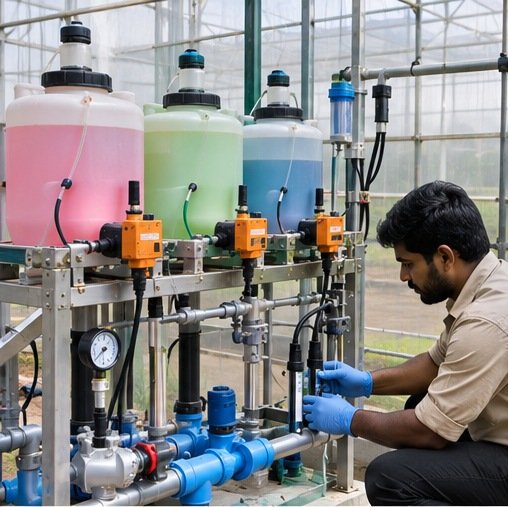
Small polyhouse growers mix fertiliser by guesswork, and nutrient strength (EC) or pH drifting off target quietly cuts yield.
A three-tank fertigation injector with EC and pH control and ready recipes for common crops.
The right nutrient mix every day, with healthier crops and less fertiliser wasted.
| Aim | product |
|---|
| Programme | Crop & value-chain solutions |
|---|
| Segment | Protected Cultivation & Vertical Farming |
|---|
| Type | Product (hardware) |
|---|
| Grade | Product grade |
|---|
| Priority | Very high |
|---|
| Duration | 18 months (12 months development plus one season of trials) |
|---|
| Where it fits | Peri-urban clusters and hill states |
|---|
| Method | Adapt existing Indian design; CIDSA Jala |
|---|
| Team role | Manufacturing & dealership |
|---|
| CIDSA lab | Lab 2 – Smart Precision Agriculture Lab |
|---|
| Funding route | Grant first, then milestone-linked seed |
|---|
| Outcome | Technology transfer and adaptation |
|---|
| Software and tools | CIDSA Smart Irrigation Flow Engine, IoT based Smart Irrigation System (Hardware & Software Kits), CIDSA Jala Water Intelligence Suite |
|---|
| Partners to involve | Engineering institution, Indian OEM / MSME manufacturer, Agri-input company |
|---|
| Estimated budget | ₹12.2 lakh, released in stages |
|---|
Stages and funding
| L0 · Learn and specify | ₹2.8 lakh · 3 short course seats and 1 professional programme seat; 3 lab software tools for 4 months; mentoring and design reviews |
|---|
| L1 · Proof of concept | ₹2.4 lakh · Design, analysis and virtual prototype on CIDSA lab software |
|---|
| L2 · Prototype | ₹1.5 lakh · 2 prototypes built and bench-tested |
|---|
| L3 · Validation and certification | ₹2.4 lakh · Field trials and statutory testing |
|---|
| L4 · Pilot batch | ₹1.1 lakh · 5 pilot units placed with early buyers, half the cost recovered |
|---|
| L5 · Launch to revenue | ₹2 lakh · Launch: dealer or channel onboarding, demos, documentation and first orders |
|---|
Farmer case studies for field reference: Narayan Giri (Pithoragarh)
Open M-163 in the portal and form a team
M-165Product grade
Grow-bag irrigation by drain sensing
Drain-volume and EC feedback scheduling for cocopeat bags
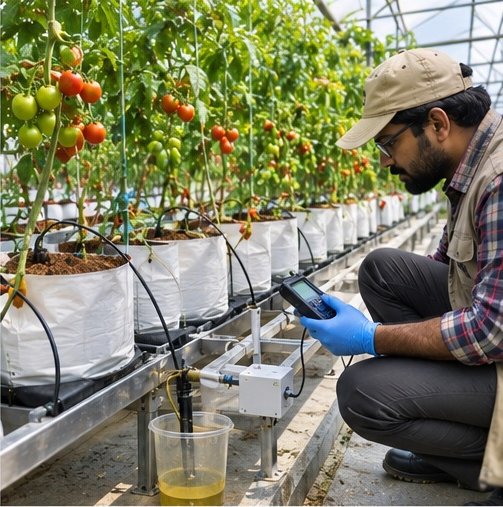
Plants in cocopeat grow-bags are often over- or under-watered, because growers can't see what's happening at the roots.
Irrigation scheduled from how much water drains from the bags and how salty it is.
Water and fertiliser matched to what the plants actually use, with less waste.
| Aim | product, smart |
|---|
| Programme | Crop & value-chain solutions |
|---|
| Segment | Protected Cultivation & Vertical Farming |
|---|
| Type | Retrofit kit / attachment |
|---|
| Grade | Product grade |
|---|
| Priority | High |
|---|
| Duration | 18 months (12 months development plus one season of trials) |
|---|
| Where it fits | Peri-urban clusters and hill states |
|---|
| Method | Integrate components & software; CIDSA Jala |
|---|
| Team role | Installer & service dealership |
|---|
| CIDSA lab | Lab 2 – Smart Precision Agriculture Lab |
|---|
| Funding route | Grant first, then milestone-linked seed |
|---|
| Outcome | System integration partnership |
|---|
| Software and tools | CIDSA Smart Irrigation Flow Engine, IoT based Smart Irrigation System (Hardware & Software Kits), CIDSA Jala Water Intelligence Suite |
|---|
| Partners to involve | Engineering institution, Startup / incubator |
|---|
| Estimated budget | ₹25.5 lakh, released in stages |
|---|
Stages and funding
| L0 · Learn and specify | ₹2.8 lakh · 3 short course seats and 1 professional programme seat; 3 lab software tools for 4 months; mentoring and design reviews |
|---|
| L1 · Proof of concept | ₹2.4 lakh · Design, analysis and virtual prototype on CIDSA lab software |
|---|
| L2 · Prototype | ₹9.1 lakh · 1 prototype built and bench-tested |
|---|
| L3 · Validation and certification | ₹1.7 lakh · Field trials and statutory testing |
|---|
| L4 · Pilot batch | ₹7.5 lakh · 2 pilot units placed with early buyers, half the cost recovered |
|---|
| L5 · Launch to revenue | ₹2 lakh · Launch: dealer or channel onboarding, demos, documentation and first orders |
|---|
Open M-165 in the portal and form a team
M-166Research grade
Insect-net house design for hot-arid zones
Structural and cooling design validated in Rajasthan
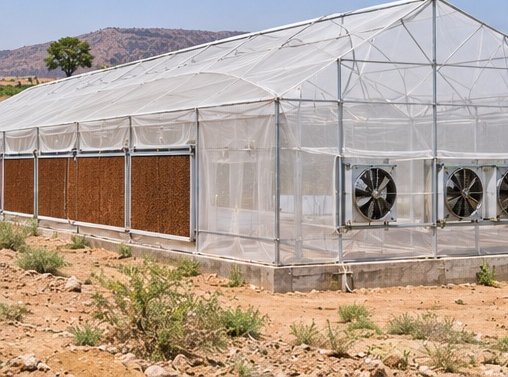
Insect-net houses protect crops from pests, but in Rajasthan's summers they trap heat and crops cook. Designs from cooler regions don't work there.
A structure and cooling design for net houses, tested in hot, dry conditions.
Net houses that stay cool enough to grow through summer in the desert belt.
| Aim | analysis, smart |
|---|
| Programme | Crop & value-chain solutions |
|---|
| Segment | Protected Cultivation & Vertical Farming |
|---|
| Type | Service / business model |
|---|
| Grade | Research grade |
|---|
| Priority | High |
|---|
| Duration | 18 months (12 months development plus one season of trials) |
|---|
| Where it fits | Peri-urban clusters and hill states |
|---|
| Method | Indigenous development; CIDSA Vayu |
|---|
| Team role | Testing & consulting service |
|---|
| CIDSA lab | Lab 2 – Smart Precision Agriculture Lab |
|---|
| Funding route | Research grant, then licensing |
|---|
| Outcome | Sponsored research consortium |
|---|
| Software and tools | CIDSA Vayu Climate Intelligence Suite, CIDSA Agni Ops Platform |
|---|
| Partners to involve | Agri university / ICAR institute, Engineering institution, Indian OEM / MSME manufacturer |
|---|
| Estimated budget | ₹8.7 lakh, released in stages |
|---|
Stages and funding
| L0 · Learn and specify | ₹2.4 lakh · 3 short course seats and 1 professional programme seat; 2 lab software tools for 4 months; mentoring and design reviews |
|---|
| L1 · Proof of concept | ₹2.4 lakh · Design, analysis and virtual prototype on CIDSA lab software |
|---|
| L2 · Prototype | ₹0.8 lakh · 1 prototype built and bench-tested |
|---|
| L3 · Validation and certification | ₹2.3 lakh · Field trials and statutory testing |
|---|
| L5 · Launch to revenue | ₹0.8 lakh · Launch: dealer or channel onboarding, demos, documentation and first orders |
|---|
Farmer case studies for field reference: Chandrashekhar Hari Bhadsavle (Raigad), Gabe Brown (Bismarck, North Dakota)
Open M-166 in the portal and form a team