Harvesting and threshing: joint development projects
19 projects open for teams, with CIDSA lab support, software access and staged funding. Notes on each project follow the list.
All projects
M-111Venture grade
Harvest contracting crews
Reaper, thresher and baler teams booked through the hire platform
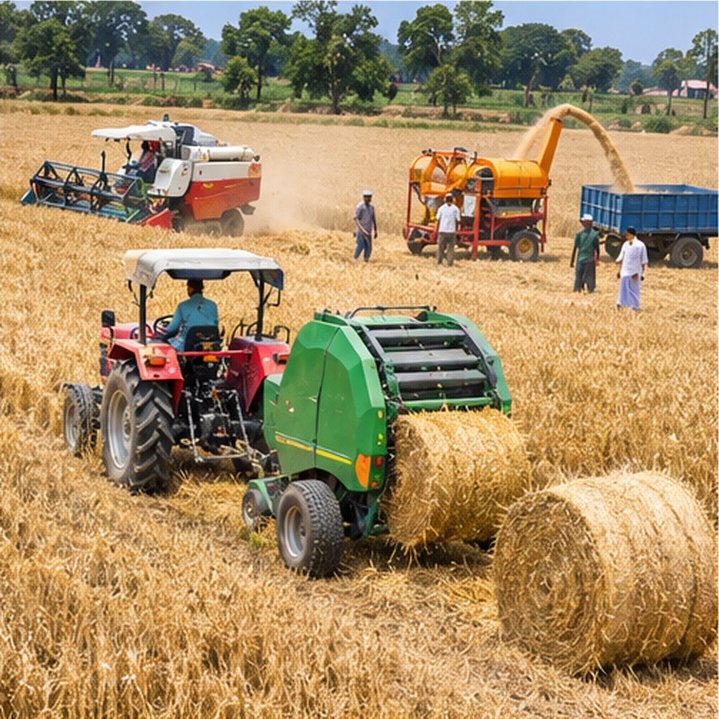
At harvest, farmers wait anxiously for reapers, threshers and balers while the crop stands at risk.
Harvest crews with reapers, threshers and balers bookable through the hire platform.
Crops harvested on time with less loss, and crews booked through the season.
| Aim | smart |
|---|
| Programme | Agripreneurship ventures |
|---|
| Segment | Agri-enterprise models |
|---|
| Type | Service enterprise |
|---|
| Grade | Venture grade |
|---|
| Priority | High |
|---|
| Duration | 18 months (12 months development plus one season of trials) |
|---|
| Where it fits | Aspirational districts and FPO clusters in all agro-climatic zones |
|---|
| Method | Incubation cohort; unit-economics model; pilot with FPOs |
|---|
| Team role | Custom-hire & field service provider |
|---|
| CIDSA lab | Lab 7 – Agri-Entrepreneurship & Market Lab |
|---|
| Funding route | Scheme support, seed grant and bank credit |
|---|
| Outcome | Incubated venture |
|---|
| Software and tools | CIDSA Farm ERP & Administrative Intelligence Suite, CIDSA Incubation & Innovation Management Platform |
|---|
| Partners to involve | FPO / KVK / farmer network, Indian OEM / MSME manufacturer |
|---|
| Estimated budget | ₹6.2 lakh, released in stages |
|---|
Stages and funding
| L0 · Learn and plan | ₹0.8 lakh · 2 short course seats; 2 lab software tools for 1 month; mentoring and design reviews |
|---|
| L1 · Business plan and first customers | ₹0.5 lakh · Business plan, 10-20 customer commitments, site and licences list |
|---|
| L2 · Asset set-up | ₹3 lakh · Set up the asset base (₹3 lakh before ₹0 lakh scheme support) |
|---|
| L3 · Licences and compliance | ₹0.1 lakh · Licences, registrations, insurance and safety compliance |
|---|
| L4 · Working capital | ₹1 lakh · Three months of operating cash for the first customers |
|---|
| L5 · Launch to revenue | ₹0.8 lakh · Local promotion, demo days, digital listing and customer onboarding |
|---|
Open M-111 in the portal and form a team
M-308Product grade
Thresher drum and concave optimisation
Peg and rasp-bar geometry for lower grain breakage
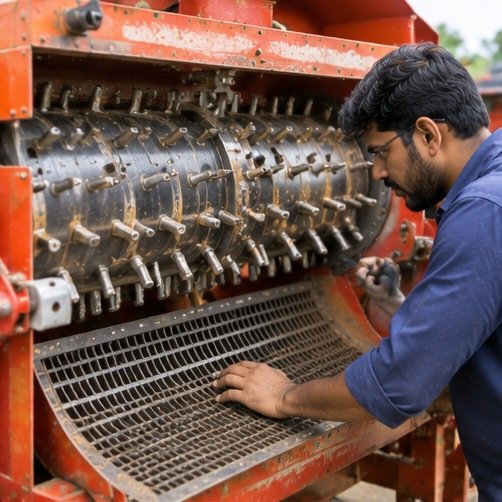
Threshers that hit grain too hard break a lot of it, which lowers its price and its value as seed.
Optimised drum and concave shapes, pegs and rasp bars.
Less broken grain at the same output.
| Aim | design, product |
|---|
| Programme | Equipment engineering |
|---|
| Segment | Harvesting & Threshing |
|---|
| Type | Multi-crop thresher |
|---|
| Grade | Product grade |
|---|
| Priority | Very high |
|---|
| Duration | 18 months (12 months development plus one season of trials) |
|---|
| Where it fits | Rice–wheat belt, pulses and millet zones |
|---|
| Method | DEM particle / soil–tool simulation; Instrumented testing & design of experiments |
|---|
| Team role | Manufacturing & dealership |
|---|
| CIDSA lab | Lab 1 – Agricultural Automation & IoT Lab |
|---|
| Funding route | Grant first, then milestone-linked seed |
|---|
| Outcome | Co-development with shared IP |
|---|
| Software and tools | Adams Machinery Module Bundle |
|---|
| Partners to involve | Agri university / ICAR institute, Engineering institution, Indian OEM / MSME manufacturer |
|---|
| Estimated budget | ₹8.5 lakh, released in stages |
|---|
Stages and funding
| L0 · Learn and specify | ₹2 lakh · 3 short course seats and 1 professional programme seat; 1 lab software tool for 4 months; mentoring and design reviews |
|---|
| L1 · Proof of concept | ₹1.5 lakh · Design, analysis and virtual prototype on CIDSA lab software |
|---|
| L2 · Prototype | ₹1.2 lakh · 1 prototype built and bench-tested |
|---|
| L3 · Validation and certification | ₹3 lakh · Field trials and statutory testing |
|---|
| L5 · Launch to revenue | ₹0.8 lakh · Launch: dealer or channel onboarding, demos, documentation and first orders |
|---|
Open M-308 in the portal and form a team
M-309Product grade
Thresher blower and sieve airflow tuning
Fan and duct redesign for cleaner grain and less loss
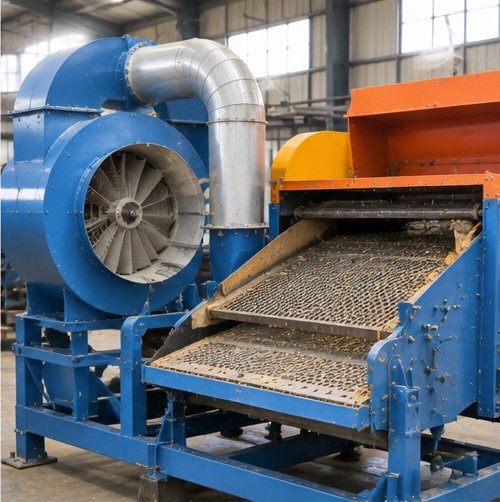
Threshers often blow good grain out with the chaff, or leave chaff mixed in, and farmers lose either way.
A redesigned fan and air duct for better cleaning.
Cleaner grain with much less lost out of the back.
| Aim | design, product |
|---|
| Programme | Equipment engineering |
|---|
| Segment | Harvesting & Threshing |
|---|
| Type | Multi-crop thresher |
|---|
| Grade | Product grade |
|---|
| Priority | Very high |
|---|
| Duration | 18 months (12 months development plus one season of trials) |
|---|
| Where it fits | Rice–wheat belt, pulses and millet zones |
|---|
| Method | CFD flow simulation; Instrumented testing & design of experiments |
|---|
| Team role | Manufacturing & dealership |
|---|
| CIDSA lab | Lab 5 – Drone Technology & Aerial Imaging Lab |
|---|
| Funding route | Grant first, then milestone-linked seed |
|---|
| Outcome | Co-development with shared IP |
|---|
| Software and tools | Cradle CFD (scFLOW Performance Set – 4 Cores) |
|---|
| Partners to involve | Agri university / ICAR institute, Engineering institution, Indian OEM / MSME manufacturer |
|---|
| Estimated budget | ₹15.3 lakh, released in stages |
|---|
Stages and funding
| L0 · Learn and specify | ₹2 lakh · 3 short course seats and 1 professional programme seat; 1 lab software tool for 4 months; mentoring and design reviews |
|---|
| L1 · Proof of concept | ₹2.4 lakh · Design, analysis and virtual prototype on CIDSA lab software |
|---|
| L2 · Prototype | ₹3.1 lakh · 2 prototypes built and bench-tested |
|---|
| L3 · Validation and certification | ₹3 lakh · Field trials and statutory testing |
|---|
| L4 · Pilot batch | ₹2.8 lakh · 5 pilot units placed with early buyers, half the cost recovered |
|---|
| L5 · Launch to revenue | ₹2 lakh · Launch: dealer or channel onboarding, demos, documentation and first orders |
|---|
Open M-309 in the portal and form a team
M-310Product grade
Reaper cutter-bar knife life and drive balance
Knife material and crank balancing to cut vibration
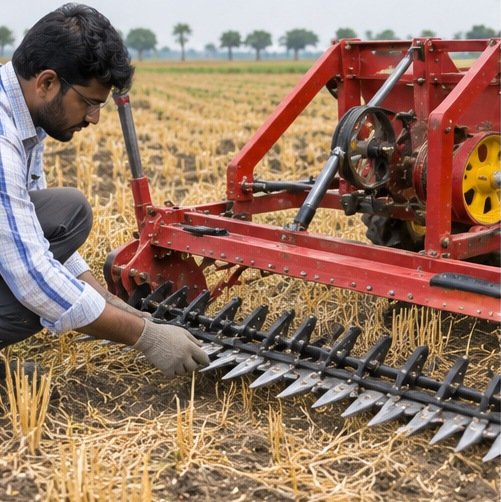
Reaper knives wear quickly and the cutter bar shakes the whole machine, causing breakdowns and tiring the operator.
Better knife material and a balanced crank drive.
Longer knife life and smoother running.
| Aim | design, analysis, product |
|---|
| Programme | Equipment engineering |
|---|
| Segment | Harvesting & Threshing |
|---|
| Type | Reaper & reaper-binder |
|---|
| Grade | Product grade |
|---|
| Priority | High |
|---|
| Duration | 18 months (12 months development plus one season of trials) |
|---|
| Where it fits | Rice–wheat belt, pulses and millet zones |
|---|
| Method | Multibody dynamics; Materials & wear testing; Fatigue & durability analysis |
|---|
| Team role | Manufacturing & dealership |
|---|
| CIDSA lab | Lab 1 – Agricultural Automation & IoT Lab |
|---|
| Funding route | Grant first, then milestone-linked seed |
|---|
| Outcome | Co-development with shared IP |
|---|
| Software and tools | Adams Structures Bundle (Flex & Durability), Adams Studio Package (Adams View & Adams Solver) |
|---|
| Partners to involve | Engineering institution, Indian OEM / MSME manufacturer |
|---|
| Estimated budget | ₹8.8 lakh, released in stages |
|---|
Stages and funding
| L0 · Learn and specify | ₹2.4 lakh · 3 short course seats and 1 professional programme seat; 2 lab software tools for 4 months; mentoring and design reviews |
|---|
| L1 · Proof of concept | ₹1.5 lakh · Design, analysis and virtual prototype on CIDSA lab software |
|---|
| L2 · Prototype | ₹1.1 lakh · 1 prototype built and bench-tested |
|---|
| L3 · Validation and certification | ₹3 lakh · Field trials and statutory testing |
|---|
| L5 · Launch to revenue | ₹0.8 lakh · Launch: dealer or channel onboarding, demos, documentation and first orders |
|---|
Open M-310 in the portal and form a team
M-311Product grade
Reaper-binder knotting and bundle-size control
Fewer loose bundles and less twine use
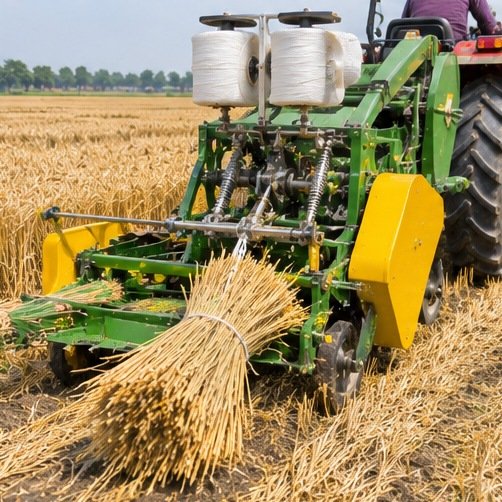
Reaper-binders often tie loose bundles that fall apart when handled, and use more twine than they should.
A study and fix of knotter timing and bundle-size control.
Tighter bundles using less twine.
| Aim | design, product |
|---|
| Programme | Equipment engineering |
|---|
| Segment | Harvesting & Threshing |
|---|
| Type | Reaper & reaper-binder |
|---|
| Grade | Product grade |
|---|
| Priority | Medium |
|---|
| Duration | 24 months |
|---|
| Where it fits | Rice–wheat belt, pulses and millet zones |
|---|
| Method | Multibody dynamics; Instrumented testing & design of experiments |
|---|
| Team role | Manufacturing & dealership |
|---|
| CIDSA lab | Lab 1 – Agricultural Automation & IoT Lab |
|---|
| Funding route | Grant first, then milestone-linked seed |
|---|
| Outcome | Co-development with shared IP |
|---|
| Software and tools | Adams Studio Package (Adams View & Adams Solver) |
|---|
| Partners to involve | Engineering institution, Indian OEM / MSME manufacturer |
|---|
| Estimated budget | ₹18.9 lakh, released in stages |
|---|
Stages and funding
| L0 · Learn and specify | ₹2 lakh · 3 short course seats and 1 professional programme seat; 1 lab software tool for 4 months; mentoring and design reviews |
|---|
| L1 · Proof of concept | ₹2.4 lakh · Design, analysis and virtual prototype on CIDSA lab software |
|---|
| L2 · Prototype | ₹4.8 lakh · 2 prototypes built and bench-tested |
|---|
| L3 · Validation and certification | ₹3 lakh · Field trials and statutory testing |
|---|
| L4 · Pilot batch | ₹4.7 lakh · 5 pilot units placed with early buyers, half the cost recovered |
|---|
| L5 · Launch to revenue | ₹2 lakh · Launch: dealer or channel onboarding, demos, documentation and first orders |
|---|
Open M-311 in the portal and form a team
M-312Platform grade
Harvest loss measurement app
Standard tray-and-photo method for field loss estimation
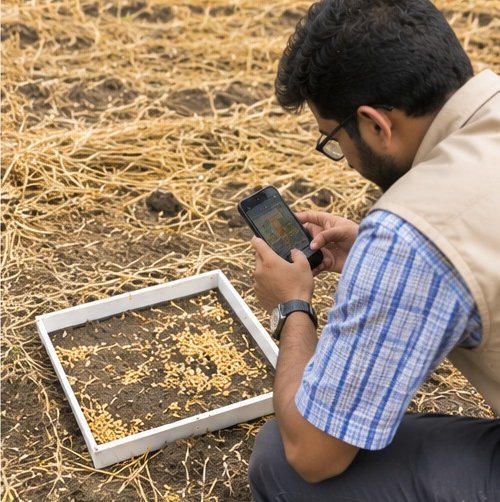
Nobody knows how much grain is lost in the field at harvest, so nobody can tell which machine settings or operators are costing farmers money.
A standard tray-and-photo method, built into an app, for estimating harvest losses.
Field losses measured quickly and consistently, and used to set machines better.
| Aim | design, analysis, product, smart |
|---|
| Programme | Equipment engineering |
|---|
| Segment | Harvesting & Threshing |
|---|
| Type | Combine harvester |
|---|
| Grade | Platform grade |
|---|
| Priority | High |
|---|
| Duration | 18 months (12 months development plus one season of trials) |
|---|
| Where it fits | Rice–wheat belt, pulses and millet zones |
|---|
| Method | Machine vision / AI; IoT telemetry & analytics software |
|---|
| Team role | Manufacturing & dealership |
|---|
| CIDSA lab | Lab 2 – Smart Precision Agriculture Lab |
|---|
| Funding route | Grant first, then milestone-linked seed |
|---|
| Outcome | Co-development with shared IP |
|---|
| Software and tools | CIDSA Harvest Planning, CIDSA Control Room – Machine Monitoring, CIDSA Agni Ops Platform |
|---|
| Partners to involve | Agri university / ICAR institute, FPO / KVK / farmer network |
|---|
| Estimated budget | ₹9.2 lakh, released in stages |
|---|
Stages and funding
| L0 · Learn and specify | ₹2.5 lakh · 3 short course seats and 1 professional programme seat; 3 lab software tools for 3 months; mentoring and design reviews |
|---|
| L1 · Proof of concept | ₹2.4 lakh · Design, analysis and virtual prototype on CIDSA lab software |
|---|
| L2 · Prototype | ₹1.8 lakh · Build and test the tool |
|---|
| L3 · Validation and certification | ₹1 lakh · Field trials |
|---|
| L4 · Pilot batch | ₹0.5 lakh · Pilot with partner OEM engineers |
|---|
| L5 · Launch to revenue | ₹1 lakh · Launch: dealer or channel onboarding, demos, documentation and first orders |
|---|
Open M-312 in the portal and form a team
M-313Product grade
Combine sieve and fan setting guide by crop
Setting charts validated with loss trays
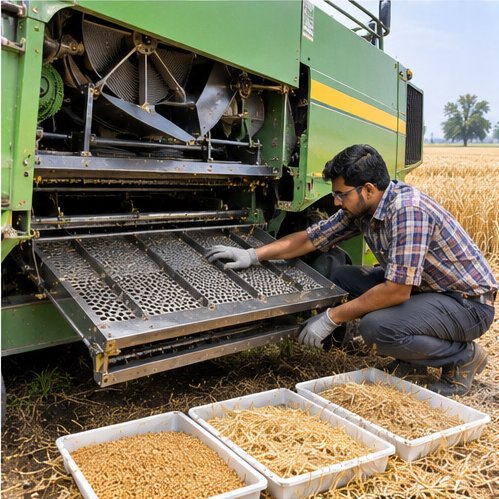
Combine operators rarely change sieve and fan settings when they move to a new crop, and grain goes out of the back with the straw.
Setting charts for each crop, checked against loss trays in the field.
Lower harvest losses from correct settings for every crop.
| Aim | product |
|---|
| Programme | Equipment engineering |
|---|
| Segment | Harvesting & Threshing |
|---|
| Type | Combine harvester |
|---|
| Grade | Product grade |
|---|
| Priority | High |
|---|
| Duration | 18 months (12 months development plus one season of trials) |
|---|
| Where it fits | Rice–wheat belt, pulses and millet zones |
|---|
| Method | CFD flow simulation; Instrumented testing & design of experiments |
|---|
| Team role | Manufacturing & dealership |
|---|
| CIDSA lab | Lab 5 – Drone Technology & Aerial Imaging Lab |
|---|
| Funding route | Grant first, then milestone-linked seed |
|---|
| Outcome | Co-development with shared IP |
|---|
| Software and tools | Cradle CFD (scFLOW Performance Set – 4 Cores) |
|---|
| Partners to involve | Agri university / ICAR institute, Indian OEM / MSME manufacturer, Global technology company |
|---|
| Estimated budget | ₹20 lakh, released in stages |
|---|
Stages and funding
| L0 · Learn and specify | ₹2 lakh · 3 short course seats and 1 professional programme seat; 1 lab software tool for 4 months; mentoring and design reviews |
|---|
| L1 · Proof of concept | ₹2.4 lakh · Design, analysis and virtual prototype on CIDSA lab software |
|---|
| L2 · Prototype | ₹10.6 lakh · 1 prototype built and bench-tested |
|---|
| L3 · Validation and certification | ₹3 lakh · Field trials and statutory testing |
|---|
| L5 · Launch to revenue | ₹2 lakh · Launch: dealer or channel onboarding, demos, documentation and first orders |
|---|
Open M-313 in the portal and form a team
M-314Product grade
Straw reaper and chopper blade optimisation
Blade and rotor design for uniform chop at lower power
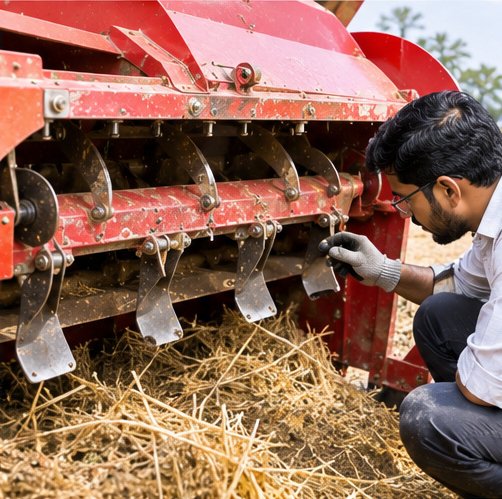
Straw reapers chop unevenly and use a lot of power, so straw handling costs more than it should.
Optimised blade and rotor design.
Uniform chop with less power.
| Aim | design, product |
|---|
| Programme | Equipment engineering |
|---|
| Segment | Harvesting & Threshing |
|---|
| Type | Straw reaper, chopper & mulcher |
|---|
| Grade | Product grade |
|---|
| Priority | High |
|---|
| Duration | 18 months (12 months development plus one season of trials) |
|---|
| Where it fits | Rice–wheat belt, pulses and millet zones |
|---|
| Method | DEM particle / soil–tool simulation; FEA structural analysis; Multibody dynamics |
|---|
| Team role | Manufacturing & dealership |
|---|
| CIDSA lab | Lab 1 – Agricultural Automation & IoT Lab |
|---|
| Funding route | Grant first, then milestone-linked seed |
|---|
| Outcome | Co-development with shared IP |
|---|
| Software and tools | Adams Machinery Module Bundle, Adams Structures Bundle (Flex & Durability), Adams Interactive Flex Bundle (ViewFlex & Flex) |
|---|
| Partners to involve | Agri university / ICAR institute, Engineering institution, Indian OEM / MSME manufacturer |
|---|
| Estimated budget | ₹9.2 lakh, released in stages |
|---|
Stages and funding
| L0 · Learn and specify | ₹2.8 lakh · 3 short course seats and 1 professional programme seat; 3 lab software tools for 4 months; mentoring and design reviews |
|---|
| L1 · Proof of concept | ₹1.5 lakh · Design, analysis and virtual prototype on CIDSA lab software |
|---|
| L2 · Prototype | ₹1.1 lakh · 1 prototype built and bench-tested |
|---|
| L3 · Validation and certification | ₹3 lakh · Field trials and statutory testing |
|---|
| L5 · Launch to revenue | ₹0.8 lakh · Launch: dealer or channel onboarding, demos, documentation and first orders |
|---|
Open M-314 in the portal and form a team
M-315Product grade
Mulcher and shredder rotor balancing
Dynamic balancing and flail layout to reduce bearing failures
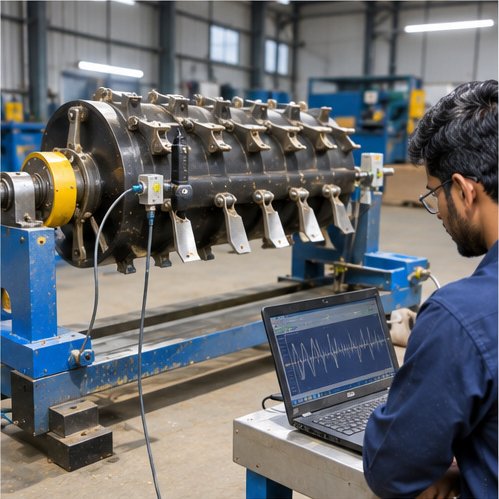
Mulcher and shredder bearings fail early because the rotors are out of balance, and every failure stops residue management in its tracks.
Dynamic rotor balancing and a better flail layout.
Far fewer bearing failures over a season.
| Aim | design, product |
|---|
| Programme | Equipment engineering |
|---|
| Segment | Harvesting & Threshing |
|---|
| Type | Straw reaper, chopper & mulcher |
|---|
| Grade | Product grade |
|---|
| Priority | Very high |
|---|
| Duration | 18 months (12 months development plus one season of trials) |
|---|
| Where it fits | Rice–wheat belt, pulses and millet zones |
|---|
| Method | Multibody dynamics; FEA structural analysis; SPC & quality analytics (TCQA) |
|---|
| Team role | Manufacturing & dealership |
|---|
| CIDSA lab | Lab 1 – Agricultural Automation & IoT Lab |
|---|
| Funding route | Grant first, then milestone-linked seed |
|---|
| Outcome | Co-development with shared IP |
|---|
| Software and tools | Adams Interactive Flex Bundle (ViewFlex & Flex), Adams Studio Package (Adams View & Adams Solver), Adams Structures Bundle (Flex & Durability) |
|---|
| Partners to involve | Engineering institution, Indian OEM / MSME manufacturer |
|---|
| Estimated budget | ₹9.2 lakh, released in stages |
|---|
Stages and funding
| L0 · Learn and specify | ₹2.8 lakh · 3 short course seats and 1 professional programme seat; 3 lab software tools for 4 months; mentoring and design reviews |
|---|
| L1 · Proof of concept | ₹1.5 lakh · Design, analysis and virtual prototype on CIDSA lab software |
|---|
| L2 · Prototype | ₹1.1 lakh · 1 prototype built and bench-tested |
|---|
| L3 · Validation and certification | ₹3 lakh · Field trials and statutory testing |
|---|
| L5 · Launch to revenue | ₹0.8 lakh · Launch: dealer or channel onboarding, demos, documentation and first orders |
|---|
Open M-315 in the portal and form a team
M-316Product grade
Baler knotter and pick-up reliability
Knotter timing and pick-up tine study
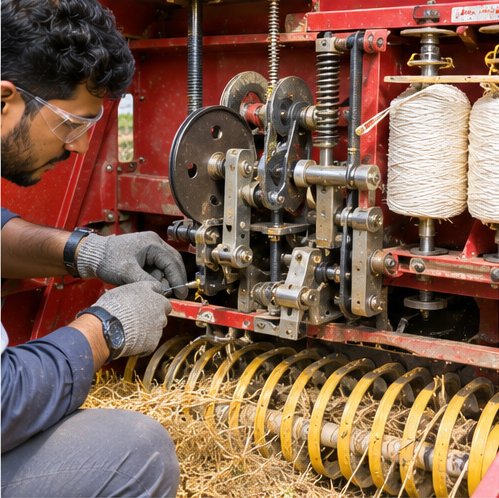
Baler knotters miss ties and pick-ups clog in uneven windrows, stopping the baler every few minutes.
A study of knotter timing and pick-up tines, with fixes.
Fewer missed ties and blockages, and more bales per hour.
| Aim | design, product |
|---|
| Programme | Equipment engineering |
|---|
| Segment | Harvesting & Threshing |
|---|
| Type | Baler |
|---|
| Grade | Product grade |
|---|
| Priority | High |
|---|
| Duration | 24 months |
|---|
| Where it fits | Rice–wheat belt, pulses and millet zones |
|---|
| Method | Multibody dynamics; Fatigue & durability analysis; Instrumented testing & design of experiments |
|---|
| Team role | Manufacturing & dealership |
|---|
| CIDSA lab | Lab 1 – Agricultural Automation & IoT Lab |
|---|
| Funding route | Grant first, then milestone-linked seed |
|---|
| Outcome | Co-development with shared IP |
|---|
| Software and tools | Adams Structures Bundle (Flex & Durability), Adams Studio Package (Adams View & Adams Solver) |
|---|
| Partners to involve | Engineering institution, Indian OEM / MSME manufacturer, Global technology company |
|---|
| Estimated budget | ₹28.3 lakh, released in stages |
|---|
Stages and funding
| L0 · Learn and specify | ₹2.4 lakh · 3 short course seats and 1 professional programme seat; 2 lab software tools for 4 months; mentoring and design reviews |
|---|
| L1 · Proof of concept | ₹2.4 lakh · Design, analysis and virtual prototype on CIDSA lab software |
|---|
| L2 · Prototype | ₹9.1 lakh · 2 prototypes built and bench-tested |
|---|
| L3 · Validation and certification | ₹3 lakh · Field trials and statutory testing |
|---|
| L4 · Pilot batch | ₹9.4 lakh · 5 pilot units placed with early buyers, half the cost recovered |
|---|
| L5 · Launch to revenue | ₹2 lakh · Launch: dealer or channel onboarding, demos, documentation and first orders |
|---|
Open M-316 in the portal and form a team
M-317Product grade
Small square baler for 35–45 hp tractors
Compact baler matched to common tractor sizes
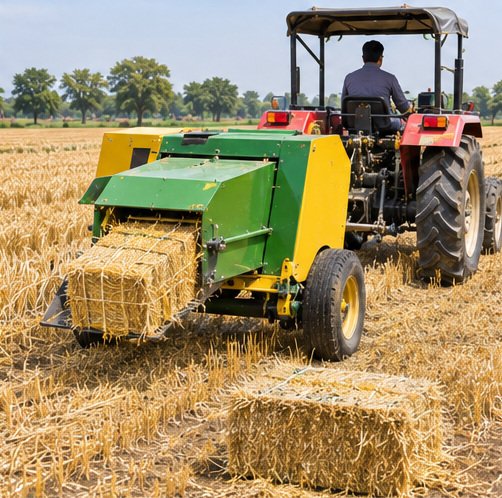
Most square balers need tractors bigger than small farmers and hiring centres own, so straw is often left or burnt.
A compact square baler matched to 35–45 hp tractors.
Small farmers and hiring centres baling straw with the tractors they already have.
| Aim | product |
|---|
| Programme | Equipment engineering |
|---|
| Segment | Harvesting & Threshing |
|---|
| Type | Baler |
|---|
| Grade | Product grade |
|---|
| Priority | High |
|---|
| Duration | 24 months |
|---|
| Where it fits | Rice–wheat belt, pulses and millet zones |
|---|
| Method | Multibody dynamics; FEA structural analysis; Value engineering & should-costing |
|---|
| Team role | Manufacturing & dealership |
|---|
| CIDSA lab | Lab 1 – Agricultural Automation & IoT Lab |
|---|
| Funding route | Grant first, then milestone-linked seed |
|---|
| Outcome | Co-development with shared IP |
|---|
| Software and tools | Adams Interactive Flex Bundle (ViewFlex & Flex), Adams Studio Package (Adams View & Adams Solver), Adams Structures Bundle (Flex & Durability) |
|---|
| Partners to involve | Engineering institution, Indian OEM / MSME manufacturer, Global technology company |
|---|
| Estimated budget | ₹28.7 lakh, released in stages |
|---|
Stages and funding
| L0 · Learn and specify | ₹2.8 lakh · 3 short course seats and 1 professional programme seat; 3 lab software tools for 4 months; mentoring and design reviews |
|---|
| L1 · Proof of concept | ₹2.4 lakh · Design, analysis and virtual prototype on CIDSA lab software |
|---|
| L2 · Prototype | ₹9.1 lakh · 2 prototypes built and bench-tested |
|---|
| L3 · Validation and certification | ₹3 lakh · Field trials and statutory testing |
|---|
| L4 · Pilot batch | ₹9.4 lakh · 5 pilot units placed with early buyers, half the cost recovered |
|---|
| L5 · Launch to revenue | ₹2 lakh · Launch: dealer or channel onboarding, demos, documentation and first orders |
|---|
Open M-317 in the portal and form a team
M-318Product grade
Groundnut and potato digger redesign
Blade angle and shaker web to cut damage and soil carry-over
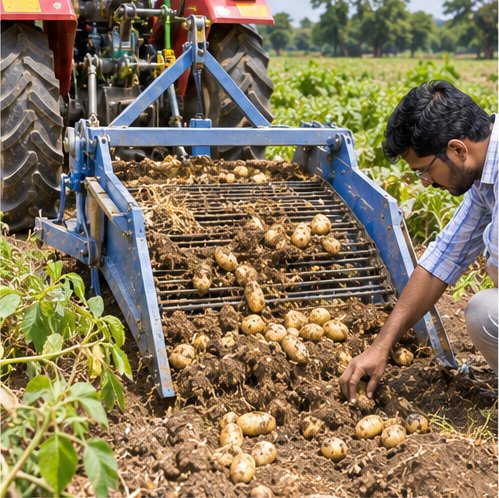
Groundnut and potato diggers bruise and cut produce and carry a lot of soil with it to the store.
A redesigned blade angle and shaker web.
Less damaged produce and much less soil carried away.
| Aim | design, product |
|---|
| Programme | Equipment engineering |
|---|
| Segment | Harvesting & Threshing |
|---|
| Type | Root-crop digger |
|---|
| Grade | Product grade |
|---|
| Priority | High |
|---|
| Duration | 24 months |
|---|
| Where it fits | Rice–wheat belt, pulses and millet zones |
|---|
| Method | DEM particle / soil–tool simulation; Multibody dynamics |
|---|
| Team role | Manufacturing & dealership |
|---|
| CIDSA lab | Lab 4 – Farm Equipment & Innovation Lab |
|---|
| Funding route | Grant first, then milestone-linked seed |
|---|
| Outcome | Co-development with shared IP |
|---|
| Software and tools | Marc Complete Package |
|---|
| Partners to involve | Agri university / ICAR institute, Indian OEM / MSME manufacturer |
|---|
| Estimated budget | ₹14.3 lakh, released in stages |
|---|
Stages and funding
| L0 · Learn and specify | ₹2 lakh · 3 short course seats and 1 professional programme seat; 1 lab software tool for 4 months; mentoring and design reviews |
|---|
| L1 · Proof of concept | ₹2.4 lakh · Design, analysis and virtual prototype on CIDSA lab software |
|---|
| L2 · Prototype | ₹2.6 lakh · 2 prototypes built and bench-tested |
|---|
| L3 · Validation and certification | ₹3 lakh · Field trials and statutory testing |
|---|
| L4 · Pilot batch | ₹2.3 lakh · 5 pilot units placed with early buyers, half the cost recovered |
|---|
| L5 · Launch to revenue | ₹2 lakh · Launch: dealer or channel onboarding, demos, documentation and first orders |
|---|
Open M-318 in the portal and form a team
M-319Product grade
Turmeric and ginger digger soil-separation web
Web pitch and agitation to shed sticky soil
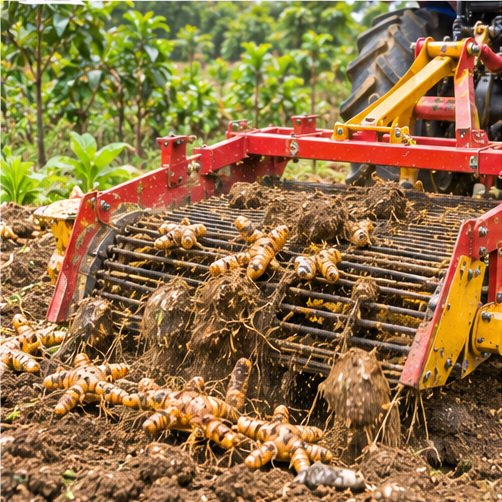
Turmeric and ginger come out of the ground caked in sticky soil that ordinary diggers can't shake off, so cleaning is done by hand.
A soil-separation web with the right pitch and shaking action for rhizomes.
Cleaner rhizomes with far less hand cleaning.
| Aim | product |
|---|
| Programme | Equipment engineering |
|---|
| Segment | Harvesting & Threshing |
|---|
| Type | Root-crop digger |
|---|
| Grade | Product grade |
|---|
| Priority | Medium |
|---|
| Duration | 24 months |
|---|
| Where it fits | Rice–wheat belt, pulses and millet zones |
|---|
| Method | DEM particle / soil–tool simulation; Multibody dynamics |
|---|
| Team role | Manufacturing & dealership |
|---|
| CIDSA lab | Lab 4 – Farm Equipment & Innovation Lab |
|---|
| Funding route | Grant first, then milestone-linked seed |
|---|
| Outcome | Co-development with shared IP |
|---|
| Software and tools | Marc Complete Package |
|---|
| Partners to involve | Agri university / ICAR institute, Indian OEM / MSME manufacturer |
|---|
| Estimated budget | ₹14.3 lakh, released in stages |
|---|
Stages and funding
| L0 · Learn and specify | ₹2 lakh · 3 short course seats and 1 professional programme seat; 1 lab software tool for 4 months; mentoring and design reviews |
|---|
| L1 · Proof of concept | ₹2.4 lakh · Design, analysis and virtual prototype on CIDSA lab software |
|---|
| L2 · Prototype | ₹2.6 lakh · 2 prototypes built and bench-tested |
|---|
| L3 · Validation and certification | ₹3 lakh · Field trials and statutory testing |
|---|
| L4 · Pilot batch | ₹2.3 lakh · 5 pilot units placed with early buyers, half the cost recovered |
|---|
| L5 · Launch to revenue | ₹2 lakh · Launch: dealer or channel onboarding, demos, documentation and first orders |
|---|
Open M-319 in the portal and form a team
M-320Research grade
Sugarcane harvester base-cutter study
Base-cutter angle and blade life in ratoon fields
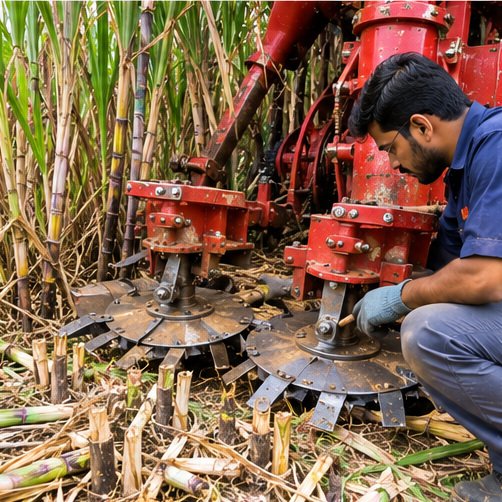
Sugarcane harvester base-cutters split and damage the stools that grow the next ratoon crop, and blades wear out fast.
A study of base-cutter angle and blade life in ratoon fields.
Cleaner cuts that protect the ratoon, with longer blade life.
| Aim | analysis, product |
|---|
| Programme | Equipment engineering |
|---|
| Segment | Harvesting & Threshing |
|---|
| Type | Sugarcane harvesting equipment |
|---|
| Grade | Research grade |
|---|
| Priority | Medium |
|---|
| Duration | 24 months |
|---|
| Where it fits | Rice–wheat belt, pulses and millet zones |
|---|
| Method | DEM particle / soil–tool simulation; Materials & wear testing; Instrumented testing & design of experiments |
|---|
| Team role | Testing & consulting service |
|---|
| CIDSA lab | Lab 4 – Farm Equipment & Innovation Lab |
|---|
| Funding route | Research grant, then licensing |
|---|
| Outcome | Sponsored research consortium |
|---|
| Software and tools | Marc Complete Package, Simufact Welding Direct Energy Deposition |
|---|
| Partners to involve | Agri university / ICAR institute, Indian OEM / MSME manufacturer, Commodity board / cooperative / mill |
|---|
| Estimated budget | ₹9.5 lakh, released in stages |
|---|
Stages and funding
| L0 · Learn and specify | ₹2.4 lakh · 3 short course seats and 1 professional programme seat; 2 lab software tools for 4 months; mentoring and design reviews |
|---|
| L1 · Proof of concept | ₹1.8 lakh · Design, analysis and virtual prototype on CIDSA lab software |
|---|
| L2 · Prototype | ₹2.2 lakh · 1 prototype built and bench-tested |
|---|
| L3 · Validation and certification | ₹2.3 lakh · Field trials and statutory testing |
|---|
| L5 · Launch to revenue | ₹0.8 lakh · Launch: dealer or channel onboarding, demos, documentation and first orders |
|---|
Open M-320 in the portal and form a team
M-321Product grade
Cane stripper and de-topper attachment
Manual-harvest aid removing trash and tops
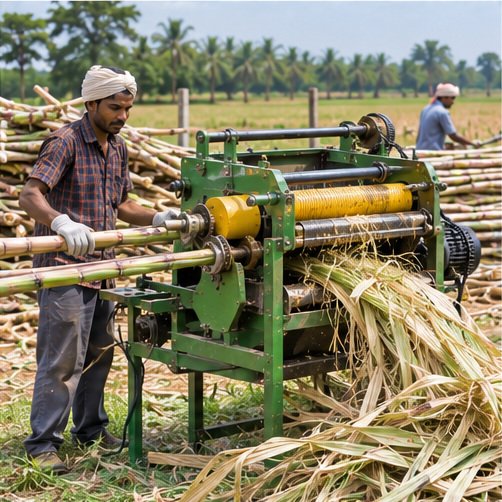
Stripping trash and cutting tops off cane by hand is slow, hard work, and labour is scarce at harvest.
A stripper and de-topper attachment that helps manual harvesting crews.
Faster cane harvesting with less effort per tonne.
| Aim | product |
|---|
| Programme | Equipment engineering |
|---|
| Segment | Harvesting & Threshing |
|---|
| Type | Sugarcane harvesting equipment |
|---|
| Grade | Product grade |
|---|
| Priority | Medium |
|---|
| Duration | 24 months |
|---|
| Where it fits | Rice–wheat belt, pulses and millet zones |
|---|
| Method | Multibody dynamics; CAD & DFM (TCCAD) |
|---|
| Team role | Manufacturing & dealership |
|---|
| CIDSA lab | Lab 1 – Agricultural Automation & IoT Lab |
|---|
| Funding route | Grant first, then milestone-linked seed |
|---|
| Outcome | Co-development with shared IP |
|---|
| Software and tools | Adams Studio Package (Adams View & Adams Solver) |
|---|
| Partners to involve | Agri university / ICAR institute, Indian OEM / MSME manufacturer, Commodity board / cooperative / mill |
|---|
| Estimated budget | ₹14.3 lakh, released in stages |
|---|
Stages and funding
| L0 · Learn and specify | ₹2 lakh · 3 short course seats and 1 professional programme seat; 1 lab software tool for 4 months; mentoring and design reviews |
|---|
| L1 · Proof of concept | ₹2.4 lakh · Design, analysis and virtual prototype on CIDSA lab software |
|---|
| L2 · Prototype | ₹2.6 lakh · 2 prototypes built and bench-tested |
|---|
| L3 · Validation and certification | ₹3 lakh · Field trials and statutory testing |
|---|
| L4 · Pilot batch | ₹2.3 lakh · 5 pilot units placed with early buyers, half the cost recovered |
|---|
| L5 · Launch to revenue | ₹2 lakh · Launch: dealer or channel onboarding, demos, documentation and first orders |
|---|
Open M-321 in the portal and form a team
M-322Product grade
Maize sheller and dehusker efficiency
Roller and spike design for lower breakage
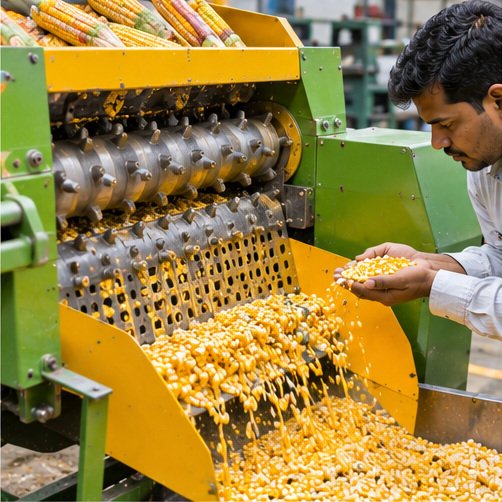
Maize shellers and dehuskers break many kernels, which lowers the grain's price and makes it unfit as seed.
Improved roller and spike designs.
Less kernel breakage at the same output.
| Aim | design, product |
|---|
| Programme | Equipment engineering |
|---|
| Segment | Harvesting & Threshing |
|---|
| Type | Maize sheller & dehusker |
|---|
| Grade | Product grade |
|---|
| Priority | High |
|---|
| Duration | 18 months (12 months development plus one season of trials) |
|---|
| Where it fits | Rice–wheat belt, pulses and millet zones |
|---|
| Method | DEM particle / soil–tool simulation; Instrumented testing & design of experiments |
|---|
| Team role | Manufacturing & dealership |
|---|
| CIDSA lab | Lab 1 – Agricultural Automation & IoT Lab |
|---|
| Funding route | Grant first, then milestone-linked seed |
|---|
| Outcome | Co-development with shared IP |
|---|
| Software and tools | Adams Machinery Module Bundle |
|---|
| Partners to involve | Agri university / ICAR institute, Indian OEM / MSME manufacturer |
|---|
| Estimated budget | ₹12.8 lakh, released in stages |
|---|
Stages and funding
| L0 · Learn and specify | ₹2 lakh · 3 short course seats and 1 professional programme seat; 1 lab software tool for 4 months; mentoring and design reviews |
|---|
| L1 · Proof of concept | ₹2.4 lakh · Design, analysis and virtual prototype on CIDSA lab software |
|---|
| L2 · Prototype | ₹1.9 lakh · 2 prototypes built and bench-tested |
|---|
| L3 · Validation and certification | ₹3 lakh · Field trials and statutory testing |
|---|
| L4 · Pilot batch | ₹1.5 lakh · 5 pilot units placed with early buyers, half the cost recovered |
|---|
| L5 · Launch to revenue | ₹2 lakh · Launch: dealer or channel onboarding, demos, documentation and first orders |
|---|
Farmer case studies for field reference: Johny Benet Murangi (Kasese), Subba Reddy (Kolar), Gagan Pal (Bilaspur), Santosh Kumari (Mainpuri)
Open M-322 in the portal and form a team
M-323Product grade
Maize dehusker roller material and spacing
Rubber and spiral roller trials for lower kernel loss
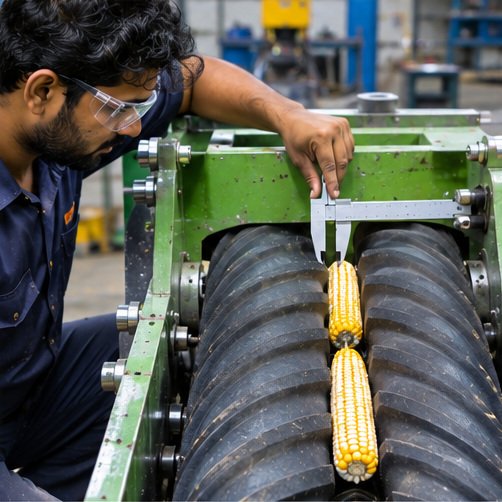
Dehusker rollers leave kernels on the cob and wear out quickly.
Trials of rubber and spiral rollers at different spacings.
Fewer kernels lost and longer roller life.
| Aim | product |
|---|
| Programme | Equipment engineering |
|---|
| Segment | Harvesting & Threshing |
|---|
| Type | Maize sheller & dehusker |
|---|
| Grade | Product grade |
|---|
| Priority | Medium |
|---|
| Duration | 18 months (12 months development plus one season of trials) |
|---|
| Where it fits | Rice–wheat belt, pulses and millet zones |
|---|
| Method | Materials & wear testing; Instrumented testing & design of experiments |
|---|
| Team role | Manufacturing & dealership |
|---|
| CIDSA lab | Lab 4 – Farm Equipment & Innovation Lab |
|---|
| Funding route | Grant first, then milestone-linked seed |
|---|
| Outcome | Co-development with shared IP |
|---|
| Software and tools | Marc Complete Package |
|---|
| Partners to involve | Agri university / ICAR institute, Indian OEM / MSME manufacturer |
|---|
| Estimated budget | ₹12.8 lakh, released in stages |
|---|
Stages and funding
| L0 · Learn and specify | ₹2 lakh · 3 short course seats and 1 professional programme seat; 1 lab software tool for 4 months; mentoring and design reviews |
|---|
| L1 · Proof of concept | ₹2.4 lakh · Design, analysis and virtual prototype on CIDSA lab software |
|---|
| L2 · Prototype | ₹1.9 lakh · 2 prototypes built and bench-tested |
|---|
| L3 · Validation and certification | ₹3 lakh · Field trials and statutory testing |
|---|
| L4 · Pilot batch | ₹1.5 lakh · 5 pilot units placed with early buyers, half the cost recovered |
|---|
| L5 · Launch to revenue | ₹2 lakh · Launch: dealer or channel onboarding, demos, documentation and first orders |
|---|
Farmer case studies for field reference: Johny Benet Murangi (Kasese), Subba Reddy (Kolar), Gagan Pal (Bilaspur), Suresh Chandra Jat (Rajsamand)
Open M-323 in the portal and form a team
M-324Product grade
Fruit harvester pole and cutter tools
Lightweight telescopic pole with catch net
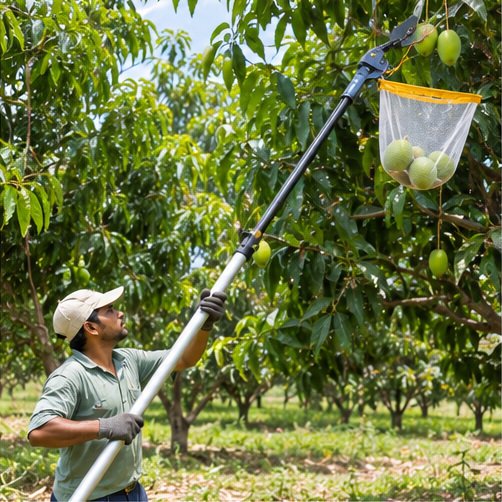
Picking fruit from tall trees means climbing ladders or knocking fruit to the ground, where it bruises and loses value.
A lightweight telescopic pole with a cutter and catch net.
Fruit harvested from the ground without bruising.
| Aim | design, product |
|---|
| Programme | Equipment engineering |
|---|
| Segment | Harvesting & Threshing |
|---|
| Type | Fruit harvesting & pruning tools |
|---|
| Grade | Product grade |
|---|
| Priority | High |
|---|
| Duration | 18 months (12 months development plus one season of trials) |
|---|
| Where it fits | Rice–wheat belt, pulses and millet zones |
|---|
| Method | CAD & DFM (TCCAD); FEA structural analysis; Ergonomic assessment |
|---|
| Team role | Manufacturing & dealership |
|---|
| CIDSA lab | Lab 4 – Farm Equipment & Innovation Lab |
|---|
| Funding route | Grant first, then milestone-linked seed |
|---|
| Outcome | Co-development with shared IP |
|---|
| Software and tools | MSC Apex Modeller, MSC Nastran LS Productivity Bundle (Nastran LS + Patran) |
|---|
| Partners to involve | Agri university / ICAR institute, Indian OEM / MSME manufacturer |
|---|
| Estimated budget | ₹24.7 lakh, released in stages |
|---|
Stages and funding
| L0 · Learn and specify | ₹2.4 lakh · 3 short course seats and 1 professional programme seat; 2 lab software tools for 4 months; mentoring and design reviews |
|---|
| L1 · Proof of concept | ₹2.4 lakh · Design, analysis and virtual prototype on CIDSA lab software |
|---|
| L2 · Prototype | ₹7.4 lakh · 2 prototypes built and bench-tested |
|---|
| L3 · Validation and certification | ₹3 lakh · Field trials and statutory testing |
|---|
| L4 · Pilot batch | ₹7.5 lakh · 5 pilot units placed with early buyers, half the cost recovered |
|---|
| L5 · Launch to revenue | ₹2 lakh · Launch: dealer or channel onboarding, demos, documentation and first orders |
|---|
Open M-324 in the portal and form a team
M-325Product grade
Pruner, secateur and fruit-picker life
Blade geometry, spring and pivot durability
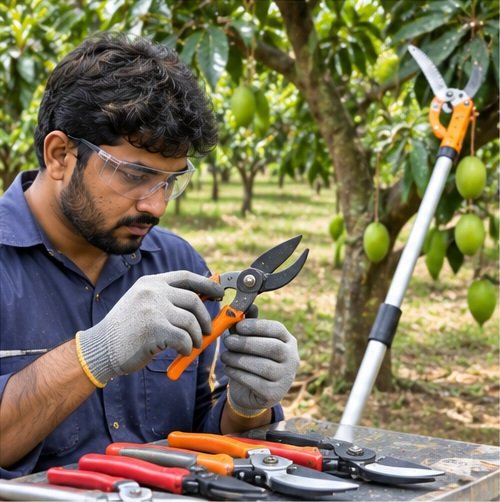
Cheap pruners and secateurs go blunt and break within a season, and pruning with poor tools damages plants.
Better blade shapes, springs and pivots.
Tools that stay sharp and work smoothly for many seasons.
| Aim | design, product |
|---|
| Programme | Equipment engineering |
|---|
| Segment | Harvesting & Threshing |
|---|
| Type | Fruit harvesting & pruning tools |
|---|
| Grade | Product grade |
|---|
| Priority | High |
|---|
| Duration | 18 months (12 months development plus one season of trials) |
|---|
| Where it fits | Rice–wheat belt, pulses and millet zones |
|---|
| Method | Materials & wear testing; Fatigue & durability analysis; Ergonomic assessment |
|---|
| Team role | Manufacturing & dealership |
|---|
| CIDSA lab | Lab 4 – Farm Equipment & Innovation Lab |
|---|
| Funding route | Grant first, then milestone-linked seed |
|---|
| Outcome | Co-development with shared IP |
|---|
| Software and tools | Simufact Welding Direct Energy Deposition, CAEFatigue Premium |
|---|
| Partners to involve | Agri university / ICAR institute, Indian OEM / MSME manufacturer |
|---|
| Estimated budget | ₹4.5 lakh, released in stages |
|---|
Stages and funding
| L0 · Learn and specify | ₹1.2 lakh · 2 short course seats; 2 lab software tools for 2 months; mentoring and design reviews |
|---|
| L1 · Proof of concept | ₹0.9 lakh · Design, analysis and virtual prototype on CIDSA lab software |
|---|
| L2 · Prototype | ₹0.1 lakh · 20 prototypes built and bench-tested |
|---|
| L3 · Validation and certification | ₹0.9 lakh · Field trials and statutory testing |
|---|
| L4 · Pilot batch | ₹0.6 lakh · 300 pilot units placed with early buyers, half the cost recovered |
|---|
| L5 · Launch to revenue | ₹0.8 lakh · Launch: dealer or channel onboarding, demos, documentation and first orders |
|---|
Open M-325 in the portal and form a team